
If you live in Fairfield County and have ever wondered where all those mosquitoes come from on a warm July evening, the answer might be closer than you think. Storm drains, catch basins, and other drainage structures running beneath your neighborhood streets can quietly produce thousands of mosquitoes every season, sending biting adults directly into nearby yards, patios, and play areas.
Key Takeaways
Storm drains, catch basins, and other stormwater systems in Connecticut routinely hold stagnant water that supports mosquito larvae just feet from residential properties. Stagnant water in drains creates ideal mosquito breeding sites, and this infrastructure is a major but often overlooked source of summer mosquitoes, including potential West Nile virus vectors, according to the Connecticut Mosquito Management Program and CDC.
Municipalities, with guidance from CT DEEP, CAES, CDC, and EPA, are responsible for inspecting and treating public storm drains with approved larvicides. Homeowners should never pour pesticides, bleach, or homemade mixtures into street drains.
Homeowners can still make a significant impact by eliminating standing water on their own property, maintaining gutters and private drainage, and coordinating with local health departments.
Partnering with trusted professionals like Safe Tick Control for full-property mosquito reduction helps address the adult mosquitoes that emerge from both public and private water sources around your home.
Mosquitoes can breed in standing water from various sources beyond storm drains, so a layered approach combining personal action, municipal programs, and professional yard treatment provides the strongest overall protection.
How Mosquitoes Use Storm Drains and Stormwater Systems
Many Connecticut mosquitoes do not come from ponds or marshes. They originate in hidden storm drains, catch basins, and other structures that hold water after rain, often located right along residential streets and driveways. Stormwater systems can create ideal mosquito breeding habitats in ways most homeowners never consider.
Storm drains form prime breeding sites for urban mosquitoes because they collect runoff, organic debris, and sediment in enclosed, shaded spaces where water sits undisturbed for days or weeks.
Even a small amount of water accumulating inside a catch basin sump is enough. Some mosquitoes can lay hundreds of eggs in just a quarter inch of water.
In warm, nutrient-rich stormwater, certain species complete their egg-to-adult development in as little as seven to ten days, meaning a single rain event can produce biting adults within two weeks.
This is a routine seasonal issue in Connecticut’s urban and suburban neighborhoods, from the tree-lined streets of Greenwich and Westport to denser areas in Stamford, Norwalk, and Bridgeport.
Standing water in stormwater systems can lead to large mosquito populations that affect entire blocks, not just the property closest to the drain.
Understanding Storm Drains, Catch Basins, and Drainage Structures
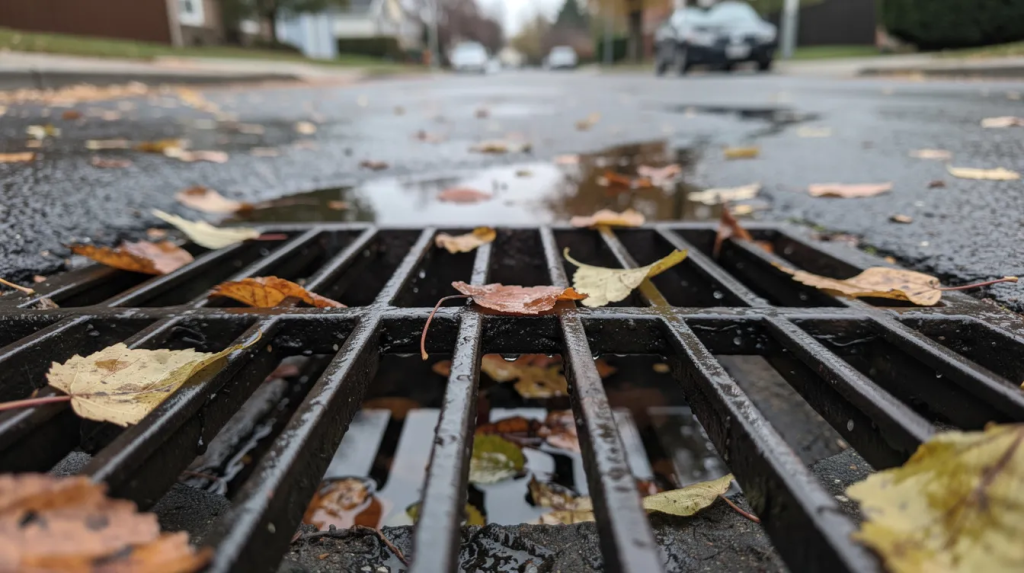
Storm drains, catch basins, culverts, and related infrastructure are designed to move rainwater off streets, driveways, parking lots, and yards to reduce flooding. They are part of larger municipal stormwater systems managed by towns and cities under state and federal clean water rules, not connected to private plumbing.
Catch basins are designed to trap sediment and debris in a sump or pit located below the outlet pipe. That sump intentionally holds a small pool of water to filter out solids before runoff flows into downstream pipes or waterways.
Catch basins retain small amounts of standing water between rainstorms, and this retained water is exactly the habitat mosquitoes need to lay eggs and develop larvae.
In older New England neighborhoods, storm drains may connect to long runs of underground pipes with shallow slopes or low spots that can trap water for weeks, especially during late spring and summer when flow is intermittent.
Clogged drains can trap water and worsen the problem. Leaves, litter, grass clippings, and other obstacles blocking the grate or outlet pipe cause additional standing water at the surface and inside the basin.
Regular drain cleaning prevents clogs and standing water, but many municipalities struggle to keep up with the sheer number of basins. For perspective, Clark County treats over 60,000 catch basins annually for mosquitoes, and many Connecticut towns face similar scale challenges relative to their size.
Poor drainage systems can lead to water accumulation around homes, creating breeding opportunities not just in the basin itself but in surrounding low spots, swale areas, and yard edges where runoff pools.
The Mosquito Larvae Life Cycle Inside Storm Drains
Mosquitoes pass through four life stages: egg, larva, pupa, and adult. Three of these stages occur in water, and much of that water may be hidden inside storm drains and catch basins where nobody sees it happening.
Adult females lay eggs on the surface of standing water or on damp surfaces that will later flood. Culex species, for instance, deposit egg rafts directly on the water surface. Other species lay eggs on the inside ledges of a catch basin that periodically fills after rain, waiting to hatch when water levels rise.
Mosquitoes complete their egg-to-adult cycle in about one to two weeks, depending on water temperature and species.
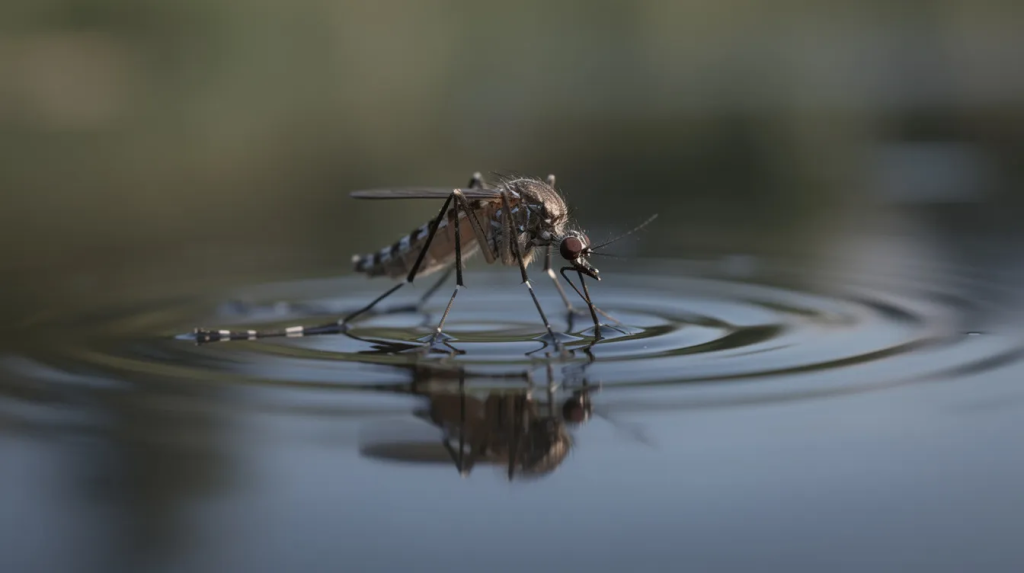
Mosquito larvae, commonly called “wigglers,” are aquatic and air-breathing. They feed on microorganisms and organic detritus in the water. Dirty, nutrient-rich stormwater is ideal for them, providing both food and shelter.
Pupae, known as “tumblers,” represent the non-feeding stage that still lives in the water column before the adult emerges. This stage is short, typically two to three days in warm weather, and calm water in catch basins favors successful metamorphosis.
In a Connecticut summer, at water temperatures around 75 to 85 degrees Fahrenheit, species like Culex pipiens can mature from egg to biting adult in roughly seven to fourteen days inside small pools within storm drains.
Because the water is shaded, protected from wind, and often undisturbed, storm drain mosquito larvae develop very efficiently compared to larvae in open puddles or birdbaths where predators like dragonflies and fish might reduce their numbers.
Why Storm Drains and Catch Basins Are Perfect Mosquito Breeding Habitats
The same features that make stormwater systems work, collecting and holding runoff, also make them ideal mosquito incubators when water becomes stagnating in enclosed, dark spaces.
These structures hold water for days or weeks after rain, especially when the outlet is partially blocked or when ground water seeps in between storms. Even in dry spells, many basins never fully dry out.
Shade and humidity in storm drains protect mosquito larvae from environmental extremes, including UV exposure, temperature swings, and desiccation. Survival rates are higher than in open puddles or exposed containers.
Organic debris in storm drains feeds mosquito larvae. Leaves, grass clippings, and soil that accumulate in the sump provide an abundant food source of bacteria and microorganisms.
Stagnant water in drains attracts mosquito larvae because it lacks the predators found in natural water bodies. There are no fish, no dragonflies, and few other obstacles to larval survival underground.
Some nuisance and disease-vector species specifically favor this kind of organically enriched, stagnant water. Culex mosquitoes, which are major vectors for the West Nile virus, are well-adapted breeders in polluted catch basin water.
Stormwater ponds often produce mosquitoes to some degree, but catch basins can be even more productive per unit of water because conditions are so consistently favorable for larvae.
Because these habitats exist below street level, property owners easily overlook them as sources of the mosquitoes landing on their arms at a backyard barbecue.
Connecticut-Specific Risks: West Nile Virus and Local Mosquito Concerns
In Connecticut, the primary public health concern connected to storm drain mosquitoes is West Nile virus, monitored annually by the Connecticut Mosquito Management Program and the Connecticut Agricultural Experiment Station (CAES).
CAES surveillance repeatedly detects West Nile virus activity each summer and early fall in urban and suburban areas of Fairfield County, including towns like Stamford, Norwalk, Greenwich, and Bridgeport. In 2026, multiple towns have already confirmed WNV-infected mosquitoes.
Culex pipiens and related Culex species, which frequently breed in storm drains and catch basins, are key vectors of West Nile virus in the Northeast according to CDC and CAES publications.
Elderly residents and people with weakened immune systems are at higher risk for severe West Nile disease, making mosquito control near homes and senior housing particularly important during the season.
While other mosquito-borne diseases are closely watched in Connecticut, such as Eastern equine encephalitis, storm drain habitats are especially tied to West Nile virus risk in densely populated areas because Culex species thrive there and have relatively short flight ranges, often staying within a quarter mile of where they emerge.
Birds play a role in the transmission cycle. Culex mosquitoes feed on birds, which serve as the primary reservoir for West Nile virus, then transmit the virus to humans through subsequent bites.
Residents can visit the CAES website to review annual mosquito trapping and virus detection reports, typically published throughout each season, for town-by-town updates on local risk levels.
Integrated Mosquito Management for Stormwater Systems
Integrated Mosquito Management, or IMM, is a multi-step, science-based approach endorsed by the CDC and EPA. It combines surveillance, habitat management, biological controls, and targeted insecticides rather than relying on spraying alone.
Public health programs utilize larvicides to control mosquito populations in storm drains, but larviciding is only one component of a broader strategy that includes monitoring, source reduction, and public education.
Connecticut’s Mosquito Management Program and local health departments use surveillance data from traps, virus testing, and complaint reports to decide where storm drain larviciding is needed and when to escalate efforts.
Physical maintenance, such as clearing debris from inlets and ensuring properly functioning drainage, is a key IMM component that reduces how long drains hold water and how much organic matter accumulates inside them.
Biological larvicides like Bti and Bs (Bacillus thuringiensis israelensis and Bacillus sphaericus) are targeted tools for killing mosquito larvae in stormwater structures with minimal impact on other organisms, as recognized by CDC and EPA guidance.
IMM emphasizes rotating larvicides, adjusting treatment timing, and avoiding overuse to prevent insecticide resistance in mosquito populations over time.
Adulticiding, or fogging for flying adult mosquitoes, is typically reserved for higher-risk situations such as confirmed human disease cases. It is not a substitute for larval control inside storm drains and catch basins, which addresses the problem at its source.
Larvicides in Storm Drains: What Professionals Use (and Why)
Larvicides are specialized products designed to target mosquito larvae in water before they become biting adults. Public agencies and licensed professionals apply them carefully in storm drains under EPA and state guidelines.
Bacterial larvicides such as Bti and Bs come in granular, tablet, or briquette formulations that are placed directly into catch basins or drain structures. They release toxins that are highly specific to mosquito and black fly larvae, leaving most other aquatic life unaffected.
Biological larvicides disrupt the life cycle of mosquito larvae in standing water by targeting the larval gut, preventing larvae from feeding and developing into the pupal stage.
Insect growth regulators like methoprene are also used in some programs to disrupt mosquito development, preventing larvae from maturing into adults while posing low risk to most non-target organisms when applied correctly. Some formulations provide up to 150 days of residual control, though real-world effectiveness varies.
The EPA registers each larvicide for specific uses, and the labeling determines exactly where and how the product can be applied. Stormwater structures are often a labeled use, but only for licensed applicators following state rules.
Larvicide treatments are applied at least three times a season, with Connecticut agencies typically targeting late spring through early fall to match the mosquito breeding cycle, as outlined in Connecticut Mosquito Management Program guidance.
Clark County treats over 60,000 catch basins annually for mosquitoes, demonstrating the scale of infrastructure involved in urban larviciding programs nationwide. Connecticut towns face proportional demands.
Proper dosage, placement, and record-keeping are essential. Studies from suburban Chicago showed that even with professional programs, roughly 35 to 40 percent of treated basins experienced some degree of control failure due to flushing, disintegration, or burial of briquettes. This is why towns contract licensed mosquito control vendors or rely on trained staff rather than leaving treatments to individual homeowners.

Why Homeowners Should Never Treat Public Storm Drains Themselves
Residents should not pour bleach, hardware-store pesticides, oils, or homemade mixtures into street storm drains, catch basins, or roadside ditches. It is unsafe, often illegal, and can pollute local waterways. No matter how tempting it is to solve the problem at your door, public infrastructure requires professional handling.
Storm drains typically discharge to local streams, rivers, and Long Island Sound. Chemicals added by homeowners can harm fish, amphibians, and beneficial insects, a concern highlighted by EPA stormwater and pesticide guidance.
Using any pesticide in or near stormwater systems without a license may violate Connecticut Department of Energy and Environmental Protection (DEEP) regulations and federal pesticide law (FIFRA), because label directions are legally enforceable.
Incorrect or excessive larvicide use can contribute to resistance in mosquito populations, undermining the effectiveness of the Connecticut Mosquito Management Program and local control efforts. This kind of failure affects entire communities, not just one property.
Personal exposure risk is real. Handling concentrated pesticides without proper protective equipment can lead to skin irritation, respiratory issues, and indoor tracking of chemicals into your house.
Even commonly available products like mosquito dunks, while safe for many private uses, should not be placed in public infrastructure by homeowners. These drains are subject to water quality regulations and must be treated by authorized personnel.
If you notice a storm drain near your property that appears to be breeding mosquitoes, report it to your local health department, public works office, or regional mosquito control program. Provide the specific location so inspectors can evaluate the structure quickly.
What Connecticut Homeowners Can Do Around Their Own Property
While public storm drains are off-limits for DIY treatment, there is a lot homeowners in Fairfield County can do on their own property to reduce mosquito breeding and bites. The ground around your house matters just as much as what happens under the street.
Regularly inspect and empty containers that hold water: buckets, toys, plant saucers, tarps, wheelbarrows, and trash can lids. Do this at least once a week during mosquito season. Mosquitoes can lay eggs in a quarter inch of water, so even small items left out can become breeding sites.
Clean and maintain private yard drainage such as French drains, dry wells, and any yard catch basins located on your property. If these features are holding stagnant water, consult a licensed contractor or pest professional.
Gutters and downspouts need attention several times per season. When they clog with leaves and organic debris, they hold water that easily supports mosquito larvae. This is especially common on properties surrounded by mature trees.
Improve grading and fix low spots in lawns and around patios that hold water for more than a few days. A landscaper or drainage specialist can help redirect runoff so it is absorbed into the ground rather than creating puddles.
Cattails and dense vegetation around private ponds or wet areas can harbor mosquitoes. Keep these areas periodically trimmed and consider whether water flow can be improved.
Follow CDC personal protection guidance: use EPA-registered repellents, wear long sleeves and pants during peak mosquito hours at dusk and dawn, and ensure window and door screens are intact. For broader tick prevention on your property, similar habitat management principles apply.
How Safe Tick Control Treats Mosquitoes on Residential Properties
Safe Tick Control is a premium tick and mosquito control company serving Fairfield County communities including Greenwich, Darien, New Canaan, Stamford, Westport, Weston, Norwalk, Wilton, Ridgefield, and Fairfield. Our approach focuses on full-property coverage, not just spraying the fence line and calling it a day.
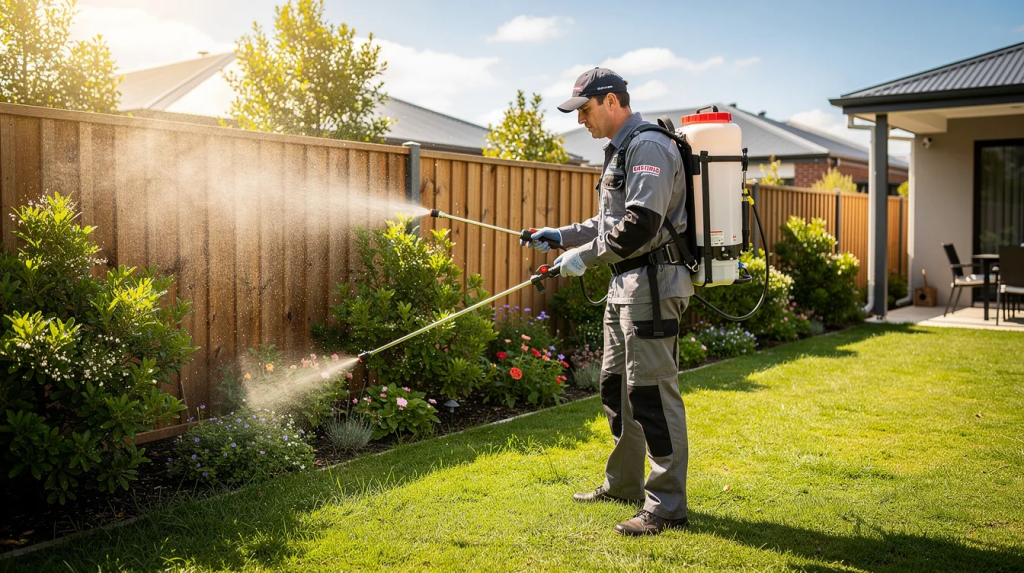
Technicians use professional high-pressure skid sprayers to treat lawns, ornamental plantings, shaded landscapes, stone walls, and other resting areas where adult mosquitoes hide during the day, offering far more thorough coverage than backpack sprayer tick treatments can provide. This reduces biting activity around patios, pools, and play areas far more effectively than perimeter-only approaches.
We offer both synthetic and organic cedar oil-based treatments for mosquitoes and ticks, similar to our organic tick spray services in Darien. Synthetic applications typically last around 30 days, while organic cedar oil services are often scheduled every two to three weeks during peak season. Both options are presented honestly so homeowners can choose based on their priorities.
Services are tailored with children, pets, and outdoor living spaces in mind, mirroring our family-focused tick and mosquito control programs in Stamford. Application timing and technique are carefully managed to avoid drift into neighboring properties or open water.
While Safe Tick Control does not treat public storm drains owned by towns, we can address private drainage features and other standing-water sites on a homeowner’s property when appropriate and permitted by product labels, just as we do through our Norwalk tick and mosquito control services.
Combining yard-wide mosquito service with existing tick control programs and our New Canaan tick control services helps Fairfield County families enjoy decks, lawns, and outdoor living with fewer biting insects and reduced disease risk.
Our local expertise means we understand the specific property conditions, from wooded lots on a hill in Weston to compact landscapes in downtown Stamford, that influence where mosquitoes rest and breed on your land.
Balancing Mosquito Control with Environmental Protection
Connecticut’s approach to mosquito management, particularly in stormwater systems, must balance public health protection with safeguarding wetlands, streams, pollinators, and other wildlife. No one benefits from trading one environmental problem for another.
EPA and CAES guidance encourages targeted larval control in known breeding sites like catch basins rather than broad, continuous spraying that could impact non-target organisms. This targeted approach reflects both regulatory requirements and practical common sense.
Using biological larvicides such as Bti and Bs in storm drains, when applied correctly, helps minimize impacts on fish and most aquatic invertebrates compared with older, more generalized insecticides.
Reducing standing water and improving drainage is inherently environmentally friendly, since it prevents mosquito breeding without adding any chemicals to the ecosystem. It is the most creative and sustainable long-term solution.
Connecticut statutes have increasingly restricted the use of certain larvicides like methoprene and resmethrin in storm drains within coastal boundaries, except under specific conditions such as documented human WNV deaths in large municipalities. This reflects the environmental sensitivity of coastal waters and the state’s commitment to protecting water quality.
Safe Tick Control prioritizes responsible application practices, follows product labels, avoids drift into water bodies, and can offer organic cedar oil options for homeowners seeking plant-based approaches in their yards.
When in doubt about any mosquito control product or method, consult reputable sources like the CT Mosquito Management Program, CDC, and EPA rather than relying on unregistered products or internet remedies poured into drains.
Working with Local Connecticut Agencies on Storm Drain Mosquito Issues
Mosquito control in public stormwater systems is a partnership between state agencies, municipalities, city public works or health departments, and residents who report issues and follow guidance. No single entity can solve this alone, and homeowner participation matters more than most people realize.
Contact your local health department or town public works office if you notice storm drains that consistently smell foul, remain filled with stagnant water, or appear clogged and may be breeding mosquitoes. Routine maintenance of storm drains improves drainage and reduces stagnant water, and your report can trigger an inspection.
Connecticut’s Mosquito Management Program, administered with CAES and other partners in the agriculture and public health sectors, publishes seasonal updates and educational materials that residents can access online to learn about local risk levels and control activities and watch agency videos or other resources.
In some Fairfield County towns, regional mosquito control districts or contracted vendors conduct routine inspections and larvicide treatments in catch basins through the summer, generally from late May through September depending on weather.
Cooperate with municipal notices about storm drain cleaning, street sweeping, and yard debris collection. These projects directly influence how long drains hold water and how many mosquito larvae they can support.
When reporting suspected problem drains, share the specific address or location so inspectors can find and evaluate the structure quickly. A marked location on a map or cross-street reference helps enormously.
Seasonal Timing: When Storm Drain Mosquitoes Are Worst in Connecticut
Mosquito activity in Connecticut is highly seasonal, and storm drain breeding is most intense when warm temperatures and frequent rainfall overlap. Understanding this calendar helps homeowners and municipalities time their responses.
In Fairfield County, storm drain mosquito issues typically ramp up in late May as temperatures rise, peak from June through August, and may persist into September depending on weather patterns. Winter brings a reprieve, but eggs from some species can survive cold months and hatch the following spring.
Periods of heavy rain followed by a week or more of warm, dry weather are especially problematic. Drains fill, then hold stagnant water as levels slowly recede, giving larvae an undisturbed window to develop.
CAES and the CT Mosquito Management Program use weekly or biweekly surveillance data during these months to decide when to emphasize catch basin larviciding and other measures.
Homeowners should be particularly vigilant about yard water sources, gutter cleaning, and outdoor repellents in mid- to late summer, when adult mosquitoes and West Nile virus detections historically increase. This timing also aligns with peak tick season in Connecticut, making combined treatment programs, such as our Westport tick and mosquito control services, especially valuable.
Safe Tick Control’s seasonal programs are structured around this Connecticut mosquito and tick calendar, with recurring treatments scheduled through the height of the season to maintain protection across your entire property.
Summary: Managing Mosquitoes in and Around Storm Drains
Storm drains, catch basins, and other stormwater structures can hold water and quietly generate large numbers of mosquitoes in Connecticut neighborhoods throughout the warmer months. These hidden breeding sites exist just below street level, producing Culex and other species that fly directly into nearby yards and outdoor living spaces. The problem is real, it is well-documented by CAES and public health agencies, and it requires a coordinated response.
Public infrastructure should be managed by trained municipal or state personnel using Integrated Mosquito Management approaches and EPA-registered larvicides, not by residents pouring chemicals into drains. Homeowners still play a critical role by eliminating standing water on their properties, maintaining private drainage, protecting themselves with repellents, and partnering with professionals like Safe Tick Control for full-property mosquito and tick reduction.
Combining responsible personal actions with community programs and professional support, including dedicated Fairfield tick and mosquito control services, is the most effective way to rid your outdoor spaces of excessive mosquitoes and enjoy a safer, more comfortable season in Fairfield County.

Frequently Asked Questions About Mosquitoes in Storm Drains
Below are answers to common questions Connecticut homeowners have about storm drains, mosquito control, and what they can safely do, along with context for our broader Fairfield County service areas and focused Greenwich tick and mosquito control options that include both organic and conventional treatments in Greenwich.
Can I put mosquito dunks or bleach into the storm drain in front of my house?
No. Residents should not place any products, including mosquito dunks, bleach, or other chemicals, into public street drains or catch basins. These structures discharge to natural waterways and are regulated under state and federal law. Only licensed applicators or trained municipal staff should treat these drains, following EPA-approved labels and Connecticut DEEP and Mosquito Management Program guidelines. If the drain near your house appears to be a persistent mosquito source, contact your local health department or public works office to report it.
How do I know if mosquitoes around my home are coming from storm drains?
It can be difficult to pinpoint the exact source without professional surveillance equipment. However, heavy mosquito activity near streets or parking lots after warm, rainy periods may indicate storm drain breeding. CAES and local mosquito control programs rely on traps, species identification, and physical inspection of catch basins to confirm sources rather than homeowner guesswork. Regardless of where they originate, reducing standing water on your property and considering professional yard treatments can significantly lower overall mosquito pressure around your home.
Are mosquitoes from storm drains more dangerous than other mosquitoes?
Some of the primary West Nile virus vectors in Connecticut, such as Culex species, frequently use storm drains and catch basins as breeding sites, which can elevate their public health importance. Not every mosquito emerging from a storm drain is infected, but CAES surveillance has repeatedly linked Culex populations in urban and suburban areas with West Nile virus detections. Following CDC prevention measures and supporting local control efforts is important regardless of the exact breeding source.
What should I do if the storm drain near my house is clogged and holding water?
Report clogged or flooded storm drains to your town’s public works department or non-emergency municipal number, providing a specific street address or nearby landmark. Clearing blockages and restoring proper flow is one of the most effective ways to protect against mosquito breeding without chemicals, and this maintenance is typically a municipal responsibility. While waiting for service, focus on eliminating any standing water on your own property to help lower local mosquito numbers.
How can Safe Tick Control help if my town already treats storm drains?
Municipal storm drain treatments focus on public infrastructure and do not address the numerous private yard breeding sites and resting areas where mosquitoes affect day-to-day outdoor living. Safe Tick Control complements town programs by targeting mosquitoes and ticks across your entire residential property, including lawns, shrubs, shaded beds, stone walls, and private drainage features, creating a more comfortable outdoor environment. Homeowners in Fairfield County get the strongest overall protection by combining municipal storm drain efforts with professional full-property treatments and diligent home water management.