
Fairfield County consistently ranks among the highest tick-pressure areas in the entire Northeast, and if you live here, you’ve probably noticed. Whether you’re finding ticks on your dog after a walk through the backyard or pulling one off your child after an afternoon on the swing set, the question comes up every season: why are there so many ticks here?
The answer involves a combination of climate, terrain, wildlife, and the way our suburban communities developed around wooded landscapes. Ticks are commonly found in wooded areas, and Fairfield County’s neighborhoods are often built right alongside or within these forests, increasing residents’ exposure to ticks. Understanding these factors helps explain why Connecticut residents in towns like Greenwich, Darien, New Canaan, Westport, and Ridgefield deal with tick pressure that simply doesn’t exist in many other parts of the country.
Key Takeaways
Fairfield County has one of the highest tick populations in the Northeast because of its unique mix of wooded properties, dense deer herds, abundant white footed mice, stone walls, shaded landscapes, and humid coastal climate. These conditions create ideal tick habitats that support blacklegged tick populations year after year.
The deer tick (also called the blacklegged tick) is the primary concern for Lyme disease and other tick borne illnesses across communities including Stamford, Norwalk, Weston, Wilton, and Fairfield. Black legged ticks are especially prevalent in Connecticut, increasing the risk of tick-borne diseases in the area. Tick populations in Connecticut have increased by approximately 25% compared to the previous year, according to the Connecticut Agricultural Experiment Station.
Ticks thrive along wooded edges, in leaf litter, pachysandra beds, and around stone walls far more than in open, sunny lawns. Suburban development close to woods means deer, mice, and other wildlife bring ticks right up to patios, playsets, and dog runs, increasing tick bite risk for families throughout the county.
Many local homeowners rely on seasonal, full-property tick treatments combined with good yard maintenance and personal protection measures to reduce tick bites and protect against tick borne diseases, particularly lyme disease.
Why Fairfield County Has So Many Ticks
Fairfield County sits at the epicenter of what public health officials call the Lyme disease belt. The region combines a humid coastal climate, extensive wooded terrain, and a style of residential development that brings humans and tick habitat into very close proximity. It’s essentially a perfect storm for deer ticks.
The increasing tick population in Fairfield County is primarily driven by climate change, rising wildlife host numbers, and invasive plant expansion, making it essential to stay informed with an up-to-date Fairfield County tick activity forecast. Climate shifts now provide higher baseline temperatures, allowing blacklegged ticks to remain active year-round whenever temperatures cross 35-40°F. Milder winters allow more ticks to survive the cold months that would otherwise reduce their numbers.
The Connecticut Department of Public Health consistently reports high rates of Lyme disease and other tick borne diseases from this region. Ecological researchers and public health officials have reported significant increases in tick populations across the Northeast, which includes Connecticut. In early surveillance work, Fairfield County recorded approximately 61 adult ticks per acre in sampled public lands-higher than other surveyed counties.
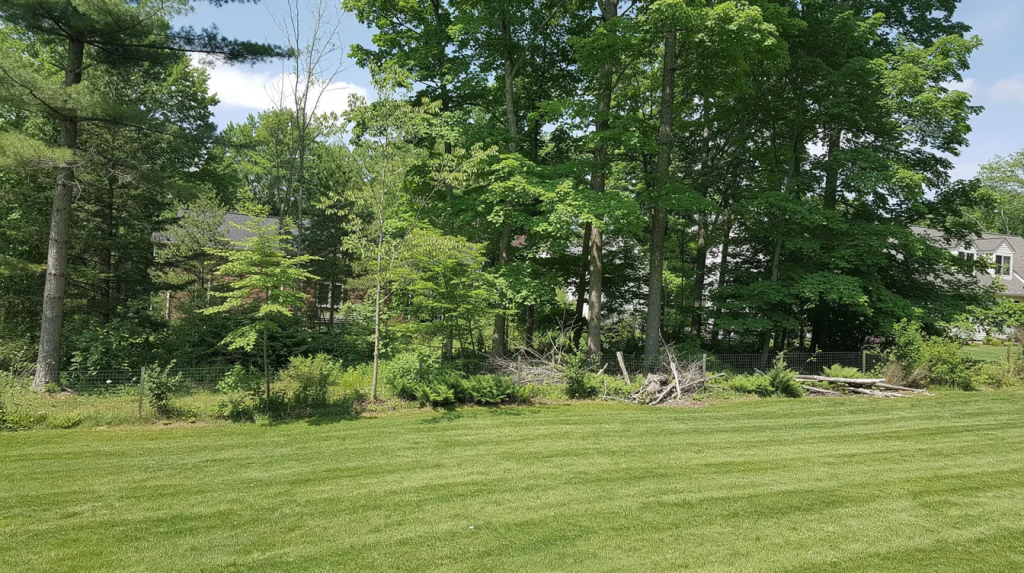
Many neighborhoods throughout Greenwich, New Canaan, Westport, and Wilton back directly onto woods, wetlands, or conservation land. The transition from forest to lawn is often just a few feet, which is ideal for ticks to move into yards. Safe Tick Control’s day-to-day fieldwork across lower Fairfield County has shown that even pristine, well-maintained properties can have very heavy tick pressure along woodland edges and shaded beds.
Local Landscape Features That Attract Ticks
Most Fairfield County tick problems tie directly to specific property features that favor deer ticks and their hosts. Understanding which areas of your property harbor the most ticks helps focus prevention efforts where they matter most.
Wooded lots and brush lines create the foundation for tick habitat. Properties that border conservation land or maintain natural wooded sections provide continuous habitat for both ticks and the wildlife that carries them.
Stone walls and stacked rock borders are extremely common in towns like Ridgefield, Wilton, and Weston. These features provide cool, humid crevices where ticks and rodent hosts hide. Our technicians routinely find heavy tick concentrations along old stone walls, especially where they meet leaf litter and overgrown vegetation.
Dense groundcovers such as pachysandra, ivy, and vinca along foundations and walkways retain moisture and shade, creating conditions that mimic the forest floor. These are frequent spots where our team finds deer ticks, even on properties that otherwise appear well-maintained.
Shaded ornamental beds around pools and patios in Greenwich, Darien, New Canaan, and Westport often have more ticks than the open lawn itself. High spring humidity and increased rainfall create damp environments that prevent ticks from drying out and dying.
Lawn edges where grass meets woods, brush, or stone walls throughout Norwalk, Stamford, and Fairfield are classic tick zones where homeowners and pets often pick up ticks. These wooded edges represent the highest-risk areas on most residential properties.

Wildlife, Deer, and the Tick Life Cycle
Ticks depend on wildlife hosts at each stage of their life cycle, and Fairfield County’s dense deer and mouse populations fuel consistently high tick numbers, which is why equipment that reaches deep into these habitats is critical and why backpack sprayers are often ineffective for tick control. The rise in tick populations is attributed to various factors, including increased deer populations and changing environmental conditions that favor tick survival and reproduction.
White-tailed deer are the primary host for adult ticks. Adult females feed on deer, then drop off to lay thousands of eggs in leaf litter. Regular deer movement through yards-especially at night-drops adult ticks along stone walls, hedgerows, and woodland borders. High populations of deer, white-footed mice, and rodents serve as major food sources for ticks at every life stage.
White footed mice, chipmunks, and other small mammals play a critical role in infecting young ticks with Lyme disease and other tick borne pathogens. Larvae and nymphs feeding on infected mice become carriers of Borrelia burgdorferi, the bacterium that causes Lyme disease. Periodic heavy oak mast years trigger a population boom in white-footed mice and white-tailed deer, which ticks rely on for blood meals.
Bird feeders, compost piles, and unmanaged brush attract wildlife, which indirectly increases tick encounters around homes. Using tick tubes, which are cardboard tubes filled with permethrin-treated cotton, can help reduce tick populations by targeting white-footed mice, a primary host for young ticks. Tick tubes work because mice line their nests with the cotton, killing ticks that try to feed on them. This approach discourages rodents from serving as effective hosts.
The goal isn’t to eliminate wildlife but to understand how their movement patterns bring ticks into contact with people, pets, and play areas-and to reduce the risk factors you can control around your property.
Suburban Development and Increased Tick Exposure
Fairfield County’s style of wooded suburbia brings people, pets, and ticks into remarkably close contact. Suburban, wooded, and brushy areas provide high humidity and protection for ticks that they wouldn’t find in more open landscapes.
Many homes in Greenwich, New Canaan, Westport, and Wilton were built on former forest, with pockets of woods, greenbelts, and conservation strips preserved between houses. This approach effectively weaves tick habitat through residential neighborhoods, creating many edges where woods meet lawn-precisely where ticks are most active and where homeowners spend time.
Fragmentation of forests into smaller wooded patches increases the number of these edge habitats. Deer, coyotes, foxes, and other wildlife easily move through connected green corridors, carrying ticks across multiple properties in a single night. Stray dogs and other unwelcome animals can also transport ticks into neighborhoods.
Fenced yards help in some cases, but deer often jump low fences, and small mammals readily slip through. Our technicians frequently see the heaviest tick counts on properties that border wetlands, conservation land, or long, overgrown back woodlines-even if the visible lawn area appears open and tidy. Simple fencing alone won’t discourage unwelcome animals that carry ticks from entering your property.

Why Shaded Properties Have More Ticks Than Sunny Lawns
Deer ticks require moisture and protection from direct sun, so shade and humidity drive where they live on a property. Not all ticks survive in every environment-blacklegged ticks specifically need humid, protected microhabitats.
Ticks dry out and die in hot, sunny, open lawn areas. Safe Tick Control often finds far more ticks in shaded side yards, under trees, and in heavy plantings than in the middle of open grass. Shade from mature oaks, maples, and ornamental evergreens-combined with irrigation and mulched beds-creates cool, humid microclimates ideal for many tick species.
Specific high-risk microhabitats include areas under swing sets tucked into the woods, behind pool cabanas set near tree lines, under low-hanging branches, and around shaded dog runs along fences. These spots often harbor more ticks than homeowners realize.
Consider the contrast between a heavily shaded, wooded lot in Weston or Ridgefield versus an open, sunny coastal lawn in parts of Fairfield or Norwalk. Property conditions change tick pressure dramatically. Homeowners should think in terms of tick zones (shaded, brushy, and damp) versus lower-risk zones (sunny, dry, and open) when planning landscaping and outdoor activities.
Tick Season and Tick-Borne Diseases in Fairfield County
In Fairfield County, ticks can be active whenever temperatures are above freezing, making the practical tick season much longer than many homeowners expect. This isn’t strictly a summer problem.
Typical seasonal patterns show adult ticks active in early spring and late fall, with the peak nymph-stage tick activity occurring from late May through July, making this the highest risk period for contracting diseases like Lyme. Larvae appear later in summer. Nymphs-about poppy-seed sized-are responsible for many tick bites because they’re hard to see and very active during peak outdoor season for families and pets.
In Connecticut, the three major tick species known to carry diseases that can be transmitted to humans are the Deer Tick (Ixodes scapularis), American Dog Tick (Dermacentor variabilis), and Lone Star Tick (Amblyomma americanum). The Deer Tick, also known as the Blacklegged Tick, is responsible for transmitting several diseases including Lyme disease, anaplasmosis, and Powassan virus.
The American Dog Tick primarily feeds on dogs but can also bite humans and is known to transmit Rocky Mountain Spotted Fever and Tularemia, although cases are rare in Connecticut. The Lone Star Tick is recognized for its aggressive behavior and can transmit diseases such as human ehrlichiosis and has been linked to red meat allergy; it is more commonly found near Long Island Sound in Connecticut. The Asian Longhorned Tick, a non-native species found in Connecticut since February 2020, does not appear to be as attracted to humans and its disease transmission potential is still under investigation.
Connecticut consistently ranks among the states with the highest rates of Lyme disease, with hundreds of confirmed cases each year. Recent data from the Connecticut Agricultural Experiment Station showed 68% of adult females tested positive for Lyme disease bacteria in Fairfield County-the highest rate statewide. Infected ticks also carry babesiosis (approximately 14% in adults), anaplasmosis (approximately 9%), and smaller but present rates of Powassan virus.
Early symptoms of Lyme disease typically appear 3-30 days after a tick bite and may include fever, headache, and body aches. If left untreated, Lyme disease can progress to cause serious complications affecting the joints, heart, and nervous system. Not every tick bite leads to illness, but the combination of high tick density and long tick season explains why regular tick checks and disease control measures are so important here.

Practical Yard Changes to Reduce Ticks
While we can’t remove every tick, smart yard changes can significantly reduce tick encounters for Fairfield County homeowners. Creating a tick safe zone in your yard involves landscaping techniques that reduce blacklegged tick populations.
Remove leaf litter along woodland edges, stone walls, and under shrubs-especially in fall and early spring when leaves accumulate in tick-prone areas. This simple step removes critical tick habitat and helps restrict tick migration into high-use areas.
Maintain defined lawn edges and mow your lawn frequently. Creating a mulch or stone buffer strip between lawn and woods reduces tick movement into areas where families spend time. Wood chips or gravel barriers work well.
Thin or lift low branches, trim overgrown shrubs, and open up overly shaded areas to allow more sun and airflow where children and pets play. Stack wood neatly and keep woodpiles, compost areas, and brush piles away from patios, playsets, and dog runs-these attract rodent hosts and create tick habitat.
Insecticides should be applied in areas where ticks are most likely to be found, such as leaf litter, crevices, and woodpiles, to effectively eliminate ticks from your property. Follow the label’s specific directions for any products you use.
Focus efforts on the highest-risk spots: along back woodlines, around stone walls, in dense pachysandra beds, and in narrow shaded side yards where our technicians routinely find the most ticks. Applying insect repellent containing DEET, at concentrations of 10 to 30 percent, is effective for preventing tick bites and is safe for children aged 2 months and older. EPA registered insect repellents provide proven protection when spending time in tick-prone areas.
Tick Bites, Proper Tick Removal, and Common Myths
Even with good prevention, occasional tick bites will happen in Fairfield County, so knowing what to do when you find a tick attached is essential. Experts recommend performing thorough body checks and showering within two hours of coming indoors to minimize tick borne illness risk. Regularly checking for ticks on yourself, your children, and pets after outdoor activities is crucial for early detection and preventing tick bites from becoming infections.
If an attached tick is found, it should be removed with fine-tipped tweezers, pulled straight up with steady pressure. Grasp the tick quickly as close to the skin as possible, pull upward steadily without twisting, and clean the bite area with rubbing alcohol or soap and water afterward. Proper tick removal prevents leaving mouthparts embedded in the skin.
Avoid home remedies such as using nail polish, petroleum jelly, burning matches, or other irritants. These methods can cause the tick to regurgitate and may actually increase risk of infection because ticks can spread germs when disturbed improperly. Never try to kill ticks while they’re still attached.
Most Lyme disease transmission requires a deer tick to be attached for at least 24-36 hours, so prompt removal significantly lowers risk. Unattached ticks or those found crawling have not yet had the opportunity to transmit disease. Note the date of any tick bite, take a picture if you wish, and monitor the bite area and your general health in the following weeks. Contact your local health department or healthcare provider with any concerns-particularly if you notice a rash, fever, or other early symptoms.
Why Many Fairfield County Homeowners Choose Seasonal Tick Treatments
Because of the region’s long tick season and persistent high tick pressure, many families layer professional Greenwich tick and mosquito treatments on top of basic yard maintenance and personal protection. Residents must use a combination of personal protection, property management, and prompt removal to defend against Lyme disease, babesiosis, and emerging invasive species like the Lone Star tick.
Full-property tick control targets woodland borders, stone walls, leaf litter, and shaded beds with residual applications rather than just spraying a narrow perimeter band, and many homeowners look for same-day tick treatment and prevention services when pressure is high. Safe Tick Control uses commercial high-pressure skid sprayers specifically to reach deep into brush lines, pachysandra, and stone walls where we routinely find clusters of deer ticks, an approach that benefits large, wooded properties in towns like New Canaan that rely on targeted New Canaan tick control services. This approach helps reduce blacklegged tick populations across the entire property.
Synthetic tick treatments generally provide approximately 30 days of residual control, while organic cedar oil treatments typically require applications every 2-3 weeks. Homeowners choose based on preference and property conditions. Seasonal programs in Fairfield County typically begin in early spring (often April) and continue through late fall to align with adult and nymph activity, and many Greenwich-area residents choose organic or conventional Greenwich tick control programs that follow this schedule. Some properties add winter inspections during mild spells since ticks can quest whenever cold winter temperatures break above freezing.
Professional tick control should always be combined with homeowner practices-leaf cleanup, trimming, tick repellent use, pet protection, and regular tick checks-for the best overall reduction in tick encounters, and Fairfield homeowners often turn to local Fairfield tick spray and prevention services as part of that layered approach. Light colored clothing makes it easier to spot ticks, and treating exposed skin with insect repellent adds another layer of protection, while Norwalk-area homeowners often pair these steps with professional Norwalk tick spray and prevention.
FAQ
These FAQs address common questions Fairfield County homeowners ask Safe Tick Control about local tick issues and prevention strategies.
Are ticks really active all year in Fairfield County, or only in summer?
While peak tick activity runs from April through September, deer ticks can be active anytime temperatures exceed freezing. Adult ticks quest for hosts during warm spells in late fall and winter, particularly along south-facing woodland edges and stone walls.
Safe Tick Control technicians often encounter adult ticks on mild days in November, December, and early spring. Continue checking pets and family members for ticks after hikes or yard work whenever the weather is unseasonably warm-even if it feels like tick season should be over.
How can I tell if a tick bite on my child or pet is high risk?
Estimate how long the tick was attached by checking its engorgement level and recalling recent outdoor exposure. Try to identify whether it appears to be a deer tick (small, dark, with a black shield) versus a larger dog tick or other ticks. Species identification helps assess risk.
Most Lyme disease transmission requires a deer tick attached for at least 24-36 hours. However, any concerning symptoms after a tick bite warrant a call to a pediatrician, physician, or veterinarian. Save a clear photo of the tick and record the date-this information helps healthcare providers if symptoms develop.
Do I need tick control if my property doesn’t border woods?
Even homes without direct woodland borders in towns like Norwalk, Stamford, or central Fairfield can have ticks. Foundation plantings, stonework, and shared green spaces often harbor ticks.
Deer, mice, and other wildlife travel along roadsides, greenbelts, and utility corridors, dropping ticks into neighborhood yards far from large forests. Evaluate your property for shaded beds, pachysandra, stone walls, and pet travel routes-these features often matter more than whether your lot technically borders woods.
What should I do if I find a tick crawling on me but it’s not attached?
Simply remove and dispose of the tick-flush it or seal it in tape-then perform a full tick check on the rest of your body and clothing. Crawling ticks haven’t had the opportunity to transmit tick borne diseases since ticks must be attached and feeding to pass pathogens.
Shower afterward and put clothes in a hot dryer cycle, especially after time spent in high-risk areas like woodland edges, stone walls, or tall brush lines. This helps kill ticks that may still be on clothing.
How often should my yard be treated for ticks in Fairfield County?
Most Fairfield County homeowners using Safe Tick Control follow a seasonal schedule starting in early spring, with synthetic treatments repeated roughly every 4-6 weeks or organic cedar oil applications every 2-3 weeks depending on preference and property pressure.
Heavily wooded or shaded properties, or homes with a history of frequent tick bites, often benefit from tighter treatment intervals during peak nymph season (late spring into early summer), which is why many residents schedule regular Stamford tick control treatments during this period. Consider your specific property conditions, family outdoor habits, and pet exposure when planning a schedule-and always layer professional treatments with ongoing yard maintenance and personal tick precautions.