
Tick Control Large Properties: A Practical Guide for Fairfield County Estates in Connecticut
Introduction
This guide provides practical, research-backed strategies for controlling ticks on large residential properties (2+ acres) in Fairfield County, Connecticut. It is designed for homeowners and property managers seeking to reduce tick populations, protect family and pets from tick-borne diseases, and maintain enjoyable outdoor spaces. Effective tick control is essential for health, safety, and maximizing the use of your property.
Key Takeaways
Large, wooded Connecticut properties (2+ acres) in communities like Greenwich, New Canaan, Westport, Weston, Wilton, Ridgefield, Fairfield, and Darien naturally support higher blacklegged tick populations due to abundant habitat and wildlife hosts.
The short answer to controlling ticks on a large property: combine habitat cleanup, full-property tick control (not just perimeter spraying), and host-targeted tools like tick tubes, with special focus on the backyard as a primary area for family safety and outdoor enjoyment.
Professional high-pressure skid sprayers are typically needed to effectively reach deep wooded borders, stone walls, and dense landscaping on estate-size lots, and relying on low-volume equipment like backpack units often leaves many protected tick habitats untreated—one of several reasons backpack sprayers don’t work well for tick control on large Connecticut properties.
Consistent seasonal treatment reduces exposure to Lyme disease but does not replace daily tick checks, repellents, and medical guidance from the CDC and CT DPH.
Why Large Connecticut Properties Struggle More With Ticks
Large, wooded and heavily landscaped yards in Fairfield County almost always experience more ticks than small open lots because there is simply more habitat for black legged ticks, which are the primary vectors of Lyme disease, and their hosts.
Common estate conditions create ideal environments: 1–5+ acre lots with long wooded borders, stone walls, shaded lawn edges, ornamental beds, pachysandra, and accumulated leaf litter. These features are everywhere in towns like Greenwich and nearby Fairfield County communities, Ridgefield, Weston, and Wilton. Ticks feed on hosts such as mice, birds, and deer, acquiring pathogens like Lyme disease bacteria during feeding.
Ticks thrive in the cool, damp leaf litter of transitional zones where lawn meets woods. Brush lines, drainage swales, and areas under mature tree canopies stay moist and shaded—exactly what deer ticks need to survive. Limiting contact between ticks and humans or pets is crucial for reducing the risk of tick-borne diseases. According to the Connecticut Agricultural Experiment Station, Fairfield County remains a high-incidence Lyme disease area with infection rates of 10-35% for Borrelia burgdorferi in blacklegged ticks, and forward-looking resources like a Fairfield County tick activity and risk forecast can help homeowners time their prevention efforts around the most dangerous parts of the season.

How Ticks Spread Across Large Yards in Fairfield County
Ticks do not jump or fly. They spread across big properties by riding deer, mice, chipmunks, birds, and pets that move through your woods and landscaping. Ticks cannot spread across large properties without riding on wildlife hosts like deer and mice. Large properties attract primary hosts responsible for the tick life cycle—deer and rodents—making tick population growth inevitable without intervention.
Deer routinely travel through back acreage, crossing stone walls, cutting through side yards, and dropping engorged adult blacklegged ticks as they move between properties. White-footed mice are the primary reservoir for Lyme disease bacteria, harboring larval and nymphal ticks around rock walls, woodpiles, sheds, and dense groundcover like pachysandra beds.
Pets and children exploring wooded trails or swing sets near tree lines can pick up ticks and bring them back toward patios and pool areas, which is why dedicated tick control for dogs and family outdoor spaces is such an important part of a large-property plan in Fairfield County. Large Connecticut properties often have multiple microhabitats—wet drainage areas, ornamental plantings, unmown borders—that allow tick numbers to build up and slowly expand into active yard areas. Homeowners in communities like New Canaan and surrounding Fairfield County towns should consider how geographic location and timing of tick tube placement can impact results.
Understanding Tick Risk on Large Properties: Where and When
On big properties, risk is rarely uniform. Some zones are true tick hot spots while others can be managed as lower-risk areas.
Typical high-risk areas include:
Wooded edges behind stone walls
Leaf litter along fence lines
Under swing sets placed near trees
Overgrown field corners
Shaded walkways to guest houses or barns
Monitoring for ticks is an important part of any management program. The most common method is tick dragging, which involves dragging a white flannel cloth over grass and leaf litter to collect ticks. While a tick drag can show if ticks are present at a specific time and location, it typically only captures about 10-15% of ticks actually present in the area.
Nymphs-the life stage responsible for most human Lyme disease transmission-peak from late May through July. Adults are active in spring and again October through November. Mapping your property into zones (high-use vs. low-use, lawn vs. woods) helps target tick control efforts efficiently.
Creating a Tick-Safe Zone Around Your Home and Outdoor Living Areas
The goal is to build a tick safe zone immediately around the house, patios, pool, and play areas, even if the rest of the acreage stays more natural. Ticks are rarely found more than nine feet from the lawn-to-woods border, so focusing efforts on these transition areas pays dividends, and professional service providers who cover multiple Fairfield County service areas typically prioritize these same zones.
Practical steps for large yards:
Remove leaf litter within 20–30 feet of activity areas:
Eliminates moist tick habitat.Keep grass short, ideally around 3 inches:
Reduces cooler, shaded environments ticks prefer and helps reduce tick populations.Create 3-foot mulch barriers between lawn and woods:
Creates a physical barrier that is dry and hot, deterring ticks since they cannot tolerate these conditions.Relocate playsets away from tree lines:
Reduces tick encounters in play areas.Trim low branches to increase sunlight:
Dries out transition zones.
These buffers using dry wood chips, pea gravel, or stone along stone walls and between play areas and brush lines discourage tick movement. Regularly removing leaf litter and trimming tall grass and weeds significantly reduces tick habitats, as these areas provide ideal conditions for ticks to thrive.
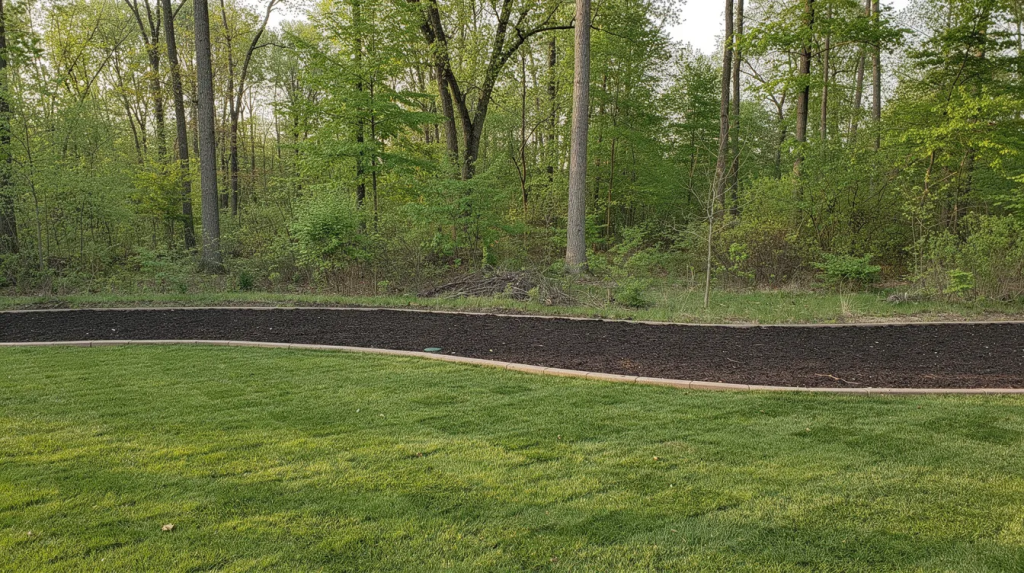
By implementing these strategies, you not only reduce tick populations but also minimize contact with ticks, which is key to lowering the risk of tick bites and Lyme disease.
Habitat Management on Large, Wooded and Landscaped Properties
In most cases, even on 3–10 acre wooded estates, thoughtful habitat management combined with professional tick and mosquito control in Greenwich can significantly reduce tick numbers in the portions of the property you actually use.
Prioritize cleanup within 50–75 feet of the house, patios, and play areas. Remove brush piles, stacked fallen limbs, and unmanaged ivy or groundcovers where mice and small mammals shelter. Certain plant species, such as Japanese Barberry, create microclimates that shield ticks from heat and dry air, promoting their survival-consider removing these where practical.
Altering the environment is the most sustainable way to limit blacklegged tick populations. Stack wood neatly in dry areas away from the house. Regularly removing leaf litter and trimming tall grass and weeds can significantly reduce tick habitats. Bagging grass clippings and leaves instead of leaving them on the lawn helps eliminate tick-friendly environments, especially for homeowners in Fairfield seeking targeted tick control.
Effective tick control strategies include installing barriers, removing debris, and maintaining barrier sprays during peak tick months. Focus on realistic, sustainable changes rather than trying to clear the entire forested acreage.
Organic vs. Synthetic Tick Control Options for Large Properties
Both organic tick control and synthetic products can be effective on large properties when applied properly, and many homeowners opt for organic tick spray and extermination services as part of their seasonal program. The right choice depends on your protection goals, tolerance for chemicals, and treatment frequency preference.
Synthetic tick control uses professional EPA-registered acaricides—pesticides that kill ticks—which typically provide around 30 days of residual control on vegetation. While some chemical treatments can be toxic if misused, EPA-registered acaricides are generally safe for the environment and unlikely to cause serious health problems when used according to package directions. Studies show that highly controlled application of acaricides can reduce ticks in treated areas for six to eight weeks, especially when combined with landscaping measures. Liquid formulations tend to be more effective at killing ticks compared to granule forms.
Organic tick control using essential oils derived from cedar and similar 25(b)-exempt products provides a safer, non-toxic alternative to synthetic pesticides, but requires more frequent applications (every 2–3 weeks) due to shorter residual effectiveness. Organic tick control methods focus on creating an environment less attractive to ticks and their hosts, which can include landscaping modifications and the use of organic repellents.
When using any treatment, follow label instructions and check with local health officials about regulations. At Safe Tick Control, we often recommend a synthetic foundation program for heavily wooded properties, with organic options for specific areas like play zones or pollinator gardens when requested, similar to our Westport tick control programs that balance coverage and safety.
Full-Property Spraying vs. Perimeter-Only on Estate-Size Yards
The short answer is that perimeter-only spraying is usually not enough for large, wooded Connecticut properties. Full-property coverage is often needed to meaningfully control ticks where your family spend time walking, playing, and gardening, which is why our Greenwich tick control services emphasize thorough coverage of high-risk zones.
Perimeter spraying treats only a narrow band along the outer property line or woods edge-missing interior stone walls, ornamental beds, and secondary wooded paths common on 2–5 acre lots.
Full-property tick control covers your entire yard: lawns, landscaped beds, stone walls, under decks, around pool fences, wooded trails, and transitional zones where ticks actually live and reproduce.
A single application of acaricides in late May or early June targets the nymph stage most responsible for transmitting disease. Professional high-pressure skid sprayers can project product into deep shrub lines, tall vegetation, and out-of-reach wooded borders more effectively than backpack sprayers-critical when you need to treat treated areas thoroughly across large acreage.
Using Tick Tubes and Host-Targeted Tools on Large Properties
On bigger properties, tick tubes and other host-focused tools are valuable supplements because they target ticks at their source: on mice that carry them, and they pair well with comprehensive Weston CT tick control services that address both habitat and hosts.
Tick tubes are cardboard tubes filled with permethrin-treated cotton that mice collect for nesting material. This kills ticks on the mice without harming the animals, helping reduce blacklegged tick nymphs over time. Since mice are the primary reservoir for Lyme disease bacteria, this approach addresses the infection cycle directly.
Place tick tubes in wooded borders, stone wall gaps, and brushy edges at 10–20 yard intervals. Higher densities work better around outbuildings, woodpiles, and heavy-pressure areas. Spring and late summer placements are optimal. On multi-acre properties, tick tubes work best integrated with habitat management and spray programs rather than used alone.
Designing a Large-Property Tick Control Plan (Connecticut Examples)
In most cases, large Connecticut properties need a layered, season-long plan. Effective tick control on large properties requires an Integrated Pest Management (IPM) approach combining landscape work, full-property treatments, and personal protection. Integrated Pest Management (IPM) is a comprehensive approach that combines multiple strategies—such as habitat modification, targeted pesticide use, and host management—to achieve effective and sustainable tick control.
Sample plan for a 3-acre partially wooded property in Westport or Fairfield: homeowners in nearby Darien often follow a similar Darien CT tick control plan tailored to their lot size and woods-to-lawn ratio.
Early spring cleanup and brush removal
Spring tick drag to map hotspots
April–October tick control at roughly 4-week intervals
Fall leaf removal along wooded edges
For a heavily wooded 5-acre property in Ridgefield or Wilton: similar principles apply to tick control programs in Stamford, where large, wooded backyards require consistent coverage and host-focused tools.
Greater focus on full-property spray coverage
Additional attention to long woodland trails and stone walls
Higher density of tick tubes near known mouse activity
Consider perimeter deer fencing-an 8-foot fence can reduce tick larvae and nymphs by up to 80-100% over time
At Safe Tick Control, we build property-specific maps for clients throughout Fairfield County, marking high-risk zones so technicians consistently target the right areas season after season.
What Homeowners Can Do Between Professional Treatments
Homeowner maintenance between visits-especially leaf cleanup, mowing, and monitoring shaded edges-has a real impact on tick levels on large properties.
Between-treatment tasks:
Mow and trim lawn edges along woods, stone walls, and driveways regularly
Inspect and clean under decks, around sheds, and near stacked firewood
Avoid keeping bird feeders near activity areas (bird feeders attract rodents)
Conduct a daily tick check after spending time outdoors
Use EPA-registered repellents when in higher-risk property areas
Additional research from the Connecticut Agricultural Experiment Station confirms that homeowner actions are especially powerful on large properties where complete environmental control is unrealistic, but focused improvements around living spaces are achievable, especially when combined with professional Norwalk CT tick control services.
When to Call a Professional Tick Control Company for Large Properties
The short answer is: if you own more than about 1 acre with woods, stone walls, or dense landscaping in Fairfield County and you’re seeing frequent ticks on people or pets, it’s time to involve a professional.
Practical triggers for professional help:
Multiple tick bites in a single season
Your dog returning with attached ticks regularly
Difficulty keeping up with leaf and brush management
Uncertainty about how far into the property to treat
Professionals bring local knowledge of Connecticut tick habitats, commercial-grade skid sprayers, and ability to design full-property programs. At Safe Tick Control, we focus specifically on residential tick and mosquito control throughout Fairfield County, offering synthetic and organic cedar oil options plus tick tubes for comprehensive coverage. Professional organic pest control treatments can also reduce mosquitoes and other pests, helping protect your yard and making outdoor spaces safer and more enjoyable for families.
FAQ: Large-Property Tick Control in Fairfield County
How often should a large Connecticut property be treated for ticks?
In most of Fairfield County, a 30-day treatment interval from April through October is standard for synthetic tick control on larger properties. Organic cedar oil programs commonly run every 2–3 weeks due to shorter residual control. Very high-pressure properties backing onto conservation land may benefit from tighter intervals during peak nymph season (late May–July).
Can I rely on tick control to prevent Lyme disease on my property?
No tick control program can guarantee you will not get Lyme disease. Treatments reduce tick populations and lower risk but do not replace personal protection. Ticks can take about two hours to insert their mouthparts and bite after attaching, so prompt tick checks and removal are important to prevent Lyme disease and other illnesses transmitted through tick bites. Continue daily tick checks, use EPA-registered repellents, shower soon after being outdoors, and consult a healthcare provider promptly if you find ticks or develop symptoms.
Are treatments safe for my children, pets, and pollinators?
When products are applied according to label directions by licensed professionals, both synthetic and organic treatments are designed for residential settings with families and pets. Acaricides registered by the EPA are generally safe for the environment and unlikely to cause serious health problems when used according to package directions. Keep children and pets off treated areas until products have dried.
Do I really need full-property spraying if we mostly use the area near the house?
On 2–5+ acre Connecticut properties, ticks from wooded borders and stone walls can quickly recolonize lawn edges and play areas. Many large-property homeowners choose a hybrid approach: full-property coverage at key times plus focused treatments around pools, patios, and playsets.
Is DIY tick control realistic on a 3–5 acre wooded property?
While homeowners can handle habitat management (leaf cleanup, mowing, trimming), treating multi-acre wooded areas thoroughly is difficult without commercial high-pressure skid sprayers. Backpack equipment cannot reach dense shrub lines, deep stone walls, and tall perimeter vegetation. Consider a partnership: you handle ongoing yard maintenance while professionals like Safe Tick Control perform full-property treatments several times per season.