
Dogs Bringing Ticks Inside: A Connecticut Homeowner’s Guide
If you live in Fairfield County with a dog, you’ve likely wondered how ticks keep showing up indoors despite your best efforts. Understanding how dogs carry ticks into your home-and what you can do about it-makes managing this common Connecticut challenge much more straightforward.
Key Takeaways
In Fairfield County, dogs are one of the most common ways ticks enter homes after spending time in wooded yards, along stone walls, and in grassy areas where ticks actively quest for hosts.
Most ticks originate outdoors, but once a dog carries hitchhiking ticks inside, they can detach onto floors, furniture, or pet bedding, where ticks can transfer to humans or even establish indoor infestations. Research indicates households with pets face a 1.83 times greater risk of tick encounters.
Preventing ticks requires a proactive, multi-layered approach that includes regular tick checks on dogs, vet-recommended tick prevention products, yard management, and professional tick control treatments to keep ticks from entering your home and outdoor spaces.
Black legged ticks (deer ticks) in Connecticut transmit Lyme disease, with Fairfield County adult deer ticks showing infection rates around 68% according to CAES 2025 surveillance data.
Safe Tick Control specializes in full-property tick control throughout Fairfield County, helping reduce tick populations where your dog spends time outdoors.
How Dogs Bring Ticks Into Connecticut Homes
In towns like Greenwich, Westport, Wilton, and Ridgefield, dogs routinely pick up ticks simply by using their own yards, which is why many owners rely on professional Greenwich tick control services. Spending time in tick-infested areas increases the risk of dogs picking up ticks. Pets, particularly dogs and cats, are common carriers of ticks, which latch onto their fur during outdoor activities and get carried indoors. Dogs can transport hitchhiking ticks into homes, where ticks can transfer to humans or establish indoor infestations under certain conditions.
Ticks “quest” on grass tips, leaf litter, and low shrubs, waiting for a passing host. Ticks find hosts by detecting heat, movement, and carbon dioxide. When your dog brushes past, ticks crawling on vegetation grab hold and find a protected spot on the animal’s body. Once attached outdoors, ticks may stay on dogs for hours to several days before detaching indoors onto floors, dog beds, or furniture.
Ticks can detach from pets once inside the home, increasing the likelihood of crawling onto furniture, bedding, or family members-which raises the risk of tick bites throughout the household.

Where Connecticut Dogs Pick Up Ticks Outdoors
Fairfield County properties often feature the exact conditions where ticks thrive. According to the Connecticut Agricultural Experiment Station, common tick habitat includes:
Wooded lots and property borders touching forest
Stone walls and brush piles
Shaded lawn edges and overgrown fence lines
Ornamental landscaping like pachysandra beds, hostas, and dense shrubs
Tall grass and accumulated leaf litter
Even a quick trip outside exposes dogs to ticks in these outdoor environments. Tick season runs spring through late fall, with activity on milder winter days when temperatures rise above freezing.
Tick Species in Connecticut and Indoor Risk
Different tick species behave differently once indoors. Most ticks that dogs bring in still originate from outdoor habitats on your property.
Blacklegged (deer) ticks are especially important in Fairfield County. They transmit Lyme disease, anaplasmosis, and babesiosis. The blacklegged tick typically does not survive more than a day indoors unless near a moist environment-making the indoor environment generally unfavorable for long term survival.
American dog ticks prefer open grassy areas and brushy zones. Rocky Mountain Spotted Fever spreads via American dog ticks and brown dog ticks, causing severe headaches, high fever, and spotted rashes in infected individuals.
Brown dog ticks are unique-they can complete their entire life cycle indoors. However, brown dog ticks are less common in typical suburban Connecticut homes compared with outdoor deer ticks. They’re more frequently found in kennels where pets sleep repeatedly in the same areas.
How Long Can Ticks Live Indoors After a Dog Brings Them In?
How long ticks live indoors depends on species, life stage, and humidity. Ticks can survive indoors for several days to a few weeks, depending on the availability of a host and environmental conditions, but most cannot survive inside long without a blood meal.
Most tick species, other than brown dog ticks, cannot survive indoors for more than 2 to 3 days due to low humidity, which causes them to dry out and die. Connecticut homes with central heating create conditions where deer ticks and American dog ticks struggle to survive.
Finding a tick inside is unsettling, but one or two ticks carried in by a dog typically doesn’t indicate a full indoor infestation has started.
Recognizing Ticks on Dogs and Inside the Home
Quickly identifying a tick on your dog or indoors allows for early removal. Ticks appear small, flat, and teardrop-shaped with eight legs as nymphs and adults. Before blood meals, they’re flat; after feeding, they become swollen and more noticeable on your dog’s skin.
Common hiding spots on dogs include:
In and around ears
Under collars and harnesses
Between toes and in armpits
Groin area and tail base
Thick fur on neck and shoulders
Common hiding places for ticks indoors include carpets, furniture, pet bedding, and cracks or crevices where they can remain undetected until they find a host.
What To Do If You Find a Tick on Your Dog or Inside Your House
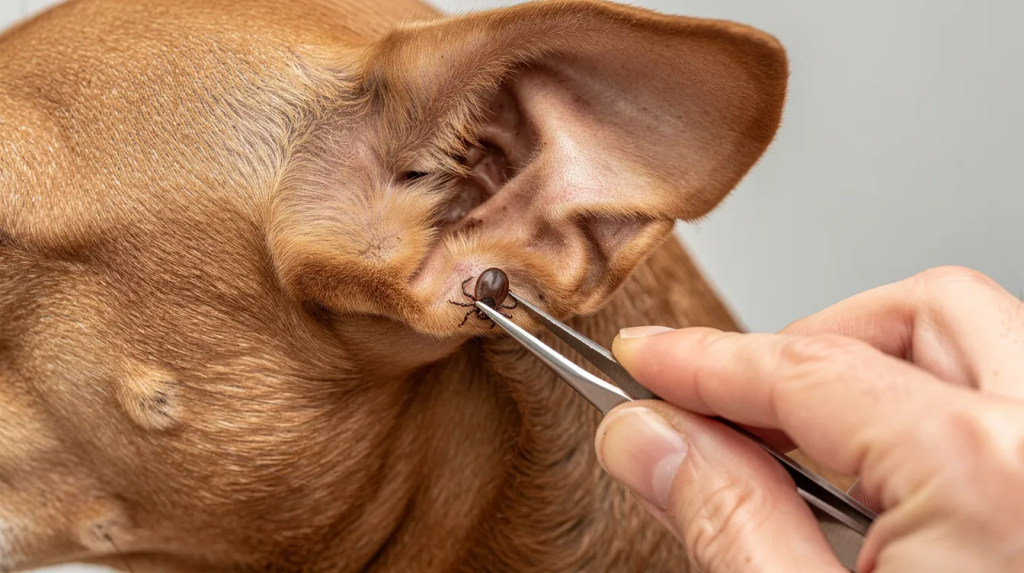
Ticks are common in Connecticut, and careful, prompt action is usually sufficient. Effective tick management involves daily inspection and prompt removal using fine tipped tweezers—grasp close to the skin, pull upward steadily, avoid twisting, and clean the area afterward with rubbing alcohol. You can also remove ticks safely using specialized tools like the Tick Key™, which helps extract ticks without squeezing and reduces the risk of disease transmission.
Consider saving the tick in a sealed bag with the date noted if you want to discuss testing with your vet or doctor.
If you find a tick crawling indoors (not attached), you can kill it by crushing in tissue, flushing, or sealing in tape. To manage indoor tick infestations, vacuum carpets and upholstered furniture regularly, wash pet bedding in hot water, and use high heat in the dryer to eliminate ticks on fabrics.
To prevent ticks from entering your home regularly, seal any cracks or gaps around windows, doors, and foundation walls.
Daily Tick Checks on Dogs: Your First Line of Defense
A full body tick check every time your dog comes inside is one of the simplest ways to prevent ticks from staying attached or dropping off indoors. Before allowing pets inside, physically check their coats for ticks, focusing on hidden spots such as the groin and between toes.
Run hands over your dog’s entire body, parting the pet’s fur to feel for small bumps. Pay extra attention to ears, neck, armpits, and tail base. Use bright lighting-small deer tick nymphs are difficult to spot on dark-coated dogs.
Check pets daily during peak season (April through November) to significantly reduce indoor tick exposure.
Veterinary Tick Prevention for Dogs in Connecticut
Tick control on pets works best as a partnership between homeowner and veterinarian, especially in high Lyme disease areas like Fairfield County. Using vet-recommended medications or collars can effectively kill or repel ticks before they attach.
Major prevention options include oral chews, spot on treatments, tick collars, and combination products addressing fleas and ticks together. Flea prevention often overlaps with tick control in these products.
No product is 100% effective-ticks may still attach briefly before being killed-so physical checks remain important even for dogs on preventives. The Lyme disease vaccine may be considered for dogs with heavy outdoor exposure, though vaccines don’t stop ticks from hitching a ride into the home.
Never use dog tick products on cats-cat owners should only use products approved by their veterinarian due to feline sensitivity to certain ingredients.
Yard and Habitat Management to Reduce Ticks on Dogs
Reducing tick habitat outdoors directly means fewer ticks on dogs and fewer ticks being brought indoors. Regular maintenance of landscapes, such as mowing lawns frequently and removing dense ground cover, reduces tick habitat significantly.
Practical steps include:
Keep grass mowed and trim low branches
Thin dense shrubs and create defined lawn-to-woods transitions
Remove leaf litter and brush piles along stone walls
Installing a physical barrier like a 3-foot-wide border of wood chips or gravel helps stop tick migration between yards and wooded areas
Manage dense groundcovers like pachysandra along busy dog paths
Remove bird feeders that attract wildlife near the home
Properties backing to woods may benefit from managing rodent harborage, since mice are key hosts for immature deer ticks.
Full-Property Tick Treatments and Professional Help
For many Fairfield County homeowners, landscaping changes alone aren’t enough to eliminate ticks. Full-property treatment means using professional equipment to treat lawns, ornamental beds, stone walls, and shaded edges rather than only spraying a narrow perimeter strip, and helps explain why backpack sprayers don’t work well for ticks.
Safe Tick Control uses commercial high-pressure skid sprayers in towns like Darien, Stamford, Norwalk, and Fairfield to reach dense vegetation and common tick harborages where dogs roam, serving a broad range of Fairfield County tick control service areas.
Homeowners may choose synthetic treatments with roughly 30 days of residual protection or organic cedar oil services applied every 2-3 weeks, depending on preference. Staying aware of the Fairfield County tick forecast and seasonal risk trends helps time these services, and reducing outdoor tick populations is one piece of a larger strategy alongside pet preventives and yard maintenance.
Checking Clothing and Outdoor Gear So Dogs Don’t Bring Ticks In Alone
Dogs aren’t the only ways ticks enter homes. Ticks can enter by hitching a ride on outdoor gear such as backpacks, shoes, or camping equipment. After hiking Mianus River Park or walking at Waveny, do a personal tick check before relaxing with your dog.
Throw outdoor clothing into a hot dryer for 10 minutes before washing-the high heat kills ticks clinging to fabric. Inspect backpacks, blankets, and dog bedding used outdoors to avoid introducing additional ticks into your indoor environment.
Lyme Disease and Other Tick-Borne Risks in Connecticut
Connecticut, especially Fairfield County, consistently reports high Lyme disease numbers. Lyme disease is transmitted primarily by blacklegged ticks and can cause fever, fatigue, joint pain, and a distinct bullseye rash in humans.
Ticks carried by dogs transmit diseases like Lyme, Rocky Mountain spotted fever, and ehrlichiosis, which can lead to anemia, paralysis, and severe infections. Symptoms of canine babesiosis include pale gums, weakness, and vomiting from parasites carried by ticks, making dedicated tick control for dogs and their families an important layer of protection.
While pets do not directly spread tick borne diseases like Lyme to humans, ticks that attach to dogs can easily pick up and move to other pets and humans, increasing risk of tick borne illness. Ticks pose severe bacterial and parasitic health risks to both pets and people.
Early tick removal within 24-36 hours significantly reduces transmission risk-underscoring why daily checks matter.
When to Call a Professional About Ticks in and Around Your Home
Consider professional help when you frequently find ticks on pets after short yard trips or discover ticks indoors despite good preventive habits. Properties with extensive woods, stone walls, or heavy shade where DIY habitat reduction proves challenging often benefit from professional assessment.
Persistent tick encounters during peak season may warrant inspection to identify hidden hotspots. Safe Tick Control brings local experience with Fairfield County tick patterns and can tailor treatment frequency and product choice to your specific property.
FAQ
Can ticks live indoors after my dog brings them inside?
Most deer ticks and American dog ticks survive only a few days indoors due to dry conditions. Brown dog ticks can live indoors and reproduce, but they’re uncommon in typical Connecticut homes. Finding a single tick usually means it hitchhiked in recently-ongoing sightings over weeks may justify calling a professional.
If my dog is on tick prevention, why do I still find ticks in the house?
Most vet-prescribed preventives kill ticks after they bite but don’t stop all ticks from attaching briefly or ticks crawling on the coat first. These ticks may drop onto floors before dying. Combining medication with daily checks and outdoor tick reduction yields better results than any single method.
Do indoor-only dogs in Connecticut still need tick protection?
Truly indoor-only dogs have lower risk, but ticks still come inside on people, visitors, and outdoor gear. Even brief outdoor potty breaks in a tick-heavy yard provide easy access for tick exposure during peak activity periods. Discuss with your veterinarian whether year round or seasonal prevention suits your situation.
How often should I check my dog for ticks during Connecticut tick season?
At least one full-body check daily during main tick season (April through November). Check immediately when dogs come inside from wooded areas, brushy property edges, or stone walls. Make tick checks part of daily routine like feeding.
Will treating my yard for ticks stop my dog from ever bringing ticks inside?
Even thorough yard treatments cannot guarantee zero ticks-dogs can still encounter ticks on walks or neighboring properties. Full-property tick control substantially reduces tick populations on your landscape, lowering overall exposure. The best approach combines professional treatments, vet-prescribed preventives, consistent checks, and sensible yard maintenance working together to keep pets safe.