
You pay for tick spraying every season. Yet you’re still finding ticks on your kids after they play in the yard. Your dog comes in with a deer tick attached. You even pulled one off yourself after mowing. What’s going wrong? Many homeowners wonder why backpack sprayers don’t work for ticks, even after repeated treatments.
For many Fairfield County homeowners, the answer comes down to equipment and application method—not just the product being sprayed. Most homeowners expect these treatments to kill ticks, but the wrong equipment or poor application can prevent this from happening.
Backpack sprayers, the workhorses of many pest control company operations, often only mist the surface of your yard. Meanwhile, blacklegged ticks live lower down, tucked into leaf litter, shaded groundcover, and the protected spaces around stone walls.
This article unpacks why equipment matters as much as product choice for tick control in Connecticut. As a Greenwich-based provider focused on high-pressure, high-volume tick habitat treatments, Safe Tick Control sees the limitations of backpack-only approaches every week. By the end, you’ll know exactly how to evaluate any provider’s equipment, coverage approach, and treatment plan—so you can stop paying for light misting that doesn’t address where ticks actually live.
Introduction to Tick Control
Tick control is essential for anyone who wants to enjoy their yard without worrying about tick bites or the risk of tick-borne diseases like Lyme disease. In Fairfield County, blacklegged ticks—also known as deer ticks—are the main culprits behind Lyme disease transmission. These tiny pests thrive in leaf litter, stone walls, and wooded areas, where they feed on small animals, pets, and even humans. Because ticks live close to the ground and often hide in shaded, moist environments, simply treating the lawn surface isn’t enough to kill ticks or keep your yard tick free.
Effective tick control starts with understanding where ticks live and how they move through your property. By targeting the habitats that support tick populations, you can dramatically reduce the risk of tick bites for your family and pets. Whether you’re dealing with a few ticks or a larger infestation, a strategic approach to tick control is the key to maintaining a safe, healthy yard and minimizing the risk of tick-borne diseases.
This article is for homeowners in Fairfield County and similar regions who want to understand why backpack sprayers often fail for tick control and what actually works to keep their families and pets safe.
Where Ticks Actually Live in Leaf Litter in Fairfield County Yards
Blacklegged ticks (Ixodes scapularis), commonly called deer ticks, are the primary concern across Greenwich, Darien, New Canaan, Stamford, Westport, Weston, and Norwalk. These tiny pests transmit Lyme disease, Powassan virus, and other tick borne diseases that affect humans and pets throughout the warmer months.
Here’s where ticks typically rest in your yard:
Leaf litter and organic layer at the soil line (often 1–4 inches thick under trees)
Ecotone zones where lawn meets wooded areas—the shaded edge where many species of small animals travel
Dense groundcovers like pachysandra, English ivy, and vinca
Stone walls, rock borders, and brush piles
Under decks, sheds, swing sets, and along fence lines
Wood piles and brushy areas at property edges
Research from the Connecticut Agricultural Experiment Station has documented higher tick populations in these ecotone and stone wall zones compared to open lawn areas. The CDC confirms that ticks prefer moist, shaded environments—exactly the spots that a surface mist often fails to penetrate.

The PSI Problem: Why Light Backpack Misting Misses Tick Habitat
PSI (pounds per square inch) measures the force behind a spray stream. Higher pressure pushes and rolls foliage aside, while low pressure mainly lays a light film on whatever it first contacts.
Most backpack sprayers used for yard work operate at 20–40 PSI. This produces a gentle mist that:
Coats the top of grass blades and outer shrub leaves
Struggles to move heavy or layered vegetation
Rarely penetrates into thatch, leaf litter, or dense ground cover beds
A local example: Picture a shaded stone wall border in Greenwich or Westport with accumulated leaf piles and pachysandra planted in front. A low-pressure backpack mist wets the top leaves of that groundcover, but the moist interior where ticks rest remains untouched. Adult ticks and feeding ticks sit in that protected layer, completely missed by the surface application.
The physics are straightforward: ticks live below the top 2–3 inches of vegetation. A mist that can’t push through those layers leaves their habitat untreated.
High pressure sprayers on truck- or skid-mounted systems (typically 60–100+ PSI) can:
“Roll” foliage with stronger streams to expose protected layers
Drive treatment deeper into thatch and organic material
Reach beneath shrubs, into dense ivy, and along stone wall crevices
The goal isn’t blasting plants—it’s using enough pressure to overcome the natural shields that protect ticks from light treatments.
Volume Matters: The Gallons-Per-Acre Gap
Effective tick control requires thorough, even coverage of high-risk zones across your entire property—not just “marking” the yard with a quick walk-around mist.
Standard backpack sprayers hold 4–15 gallons. On a typical Fairfield County property with multiple tick zones in need of professional tick prevention and extermination, this limited volume creates problems:
Less liquid available to treat all high-risk areas thoroughly
Thin, stretched applications as the tank runs low
Temptation to walk faster or skip out-of-the-way patches to finish the job
Truck- or skid-mounted systems typically carry 200–400+ gallons. This allows technicians to:
Take time saturating woodlines, leaf litter edges, and stone wall bases
Treat under-deck areas and around play equipment properly
Provide full-yard treatment when conditions warrant it
More volume, applied correctly, improves how much actually reaches the tick zone and how long the treatment remains effective after rain, irrigation, and morning dew. Safe Tick Control’s philosophy: arrive with enough volume to treat the full mapped tick habitat, not just lawn edges visible from the driveway.
Droplet Size and “Stickability”: Drift vs Real Deposition
Think of the difference between fog and light rain. Fine fog drifts easily in any breeze. Slightly larger droplets actually travel to their target and stick where they land.
Very fine backpack mist creates problems in real yards:
Drifts off target in even light Fairfield County breezes
Evaporates faster in summer heat before reaching tick zones
Settles on open lawn instead of penetrating shaded leaf litter under shrubs
Professional truck/skid systems can be calibrated so droplets are consistent in size, heavy enough to reach the target, and physically “grippy” enough to cling to leaves, stems, and the organic layer where ticks crawl.
Better deposition means more of what leaves the nozzle ends up where ticks in your yard actually live—especially in complex landscapes with mixed lawn, woods, and seal stone walls. Safe Tick Control matches droplet size and output to each property’s layout, aiming for coverage that sticks to habitat rather than drifting into the neighbor’s yard.
The Fatigue Factor: Why Backpack Jobs Miss Critical Tick Zones
Picture carrying a 40–60 pound vibrating backpack through a large Greenwich or New Canaan yard in July heat. Uphill slopes. Uneven stone steps. Dense brush at the back property line.
Technician fatigue leads to:
Shortcuts along long woodlines and back property edges
Skipped or lightly treated stone walls, wood piles, and thickets
Minimal attention under decks, behind sheds, or around swing sets
Inconsistent coverage in the final third of the property
These “skipped” areas often overlap exactly with the highest-risk tick zones identified by the Connecticut Agricultural Experiment Station and university guidance.
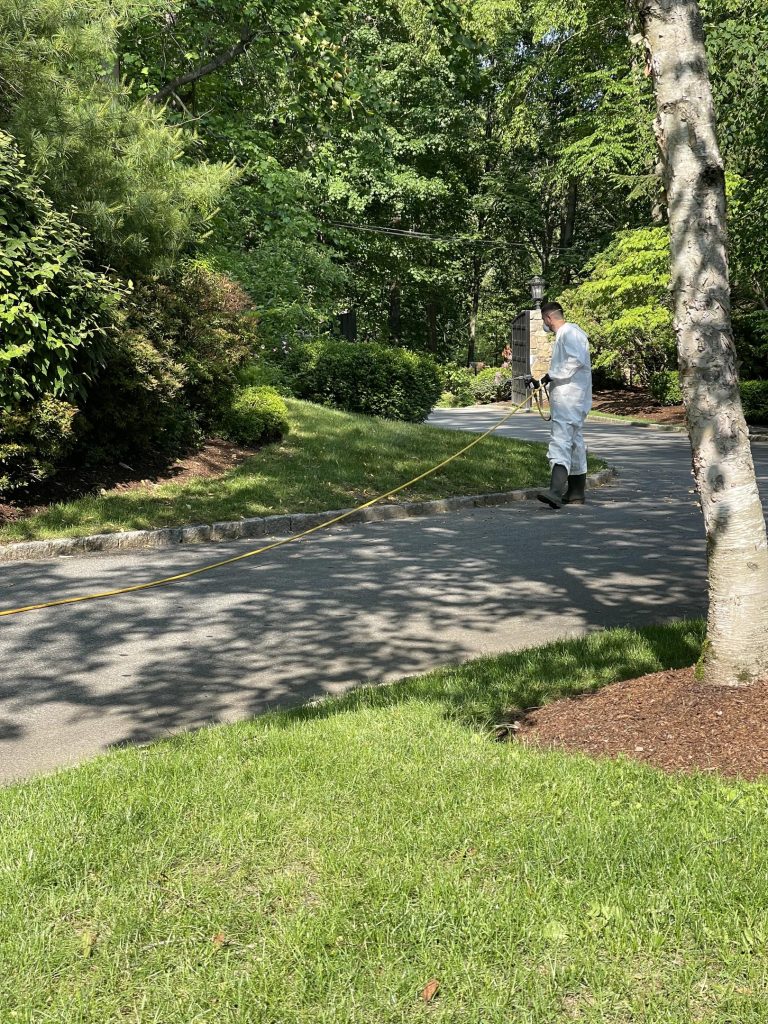
Hose-fed truck/skid systems eliminate the backpack burden:
No heavy unit on the back, reducing fatigue
Hoses reach tight corners, slopes, and deep brush lines
Enables steady, methodical 360° treatment around actual tick habitat
Safe Tick Control maps high-risk zones first, then uses truck-mounted equipment to systematically treat those zones without rushing or physically skipping hard-to-reach areas.
Yard Assessment and Preparation
Before you can effectively reduce tick populations in your yard, it’s important to assess your property for potential tick habitats and prepare the area for treatment. Many Fairfield homeowners pair this step with professional tick control services in Fairfield, CT to make sure nothing is missed. Start by walking your yard and identifying spots where ticks are most likely to hide—think leaf litter, brush piles, stone walls, and the shaded edges of wooded areas. These are the places where ticks thrive and where tick bites are most likely to occur.
Preparation is just as important as treatment. Removing leaf litter, clearing brush, and sealing gaps in stone walls can help prevent tick migration from wooded areas into your yard. The Connecticut Agricultural Experiment Station recommends creating a tick-safe zone by keeping play areas and swing sets away from the woods, stacking wood neatly, and regularly removing leaf litter from around your home. By taking these steps, you’ll reduce the number of ticks in your yard and lower the risk of tick-borne diseases for your family and pets.
A thorough yard assessment and preparation not only make tick control treatments more effective but also help in preventing tick bites before they happen. By focusing on these high-risk areas, you can create a safer outdoor environment and enjoy your yard with greater peace of mind.
Landscaping for Tick Control
Smart landscaping is one of the most effective ways to keep tick populations in check and create a tick-free yard. Many homeowners in coastal towns turn to Westport CT tick control services to complement these efforts. Ticks love shady, moist environments, so your goal should be to make your yard as inhospitable to them as possible. Start by removing leaf litter and clearing brush from around your home, especially near wooded areas and stone walls where ticks and their hosts are most active.
Increasing sunlight in your yard is a simple but powerful strategy—ticks dry out and die in sunny, open spaces. Trim back overgrown shrubs, thin out dense ground cover, and keep grass mowed short to let in as much sunlight as possible. Creating a clear barrier of mulch or gravel between your lawn and wooded areas can also help prevent tick migration into your yard, forming a tick-safe zone for your family and pets.
Consider planting species that naturally repel ticks, and avoid dense plantings of ground covers like pachysandra or ivy, which can harbor ticks. These landscaping measures are especially effective against common species like the American dog tick and lone star tick, as well as blacklegged ticks. By making these changes, you’ll reduce the risk of tick bites and help keep your yard safe all season long.
When Backpack Sprayers Do Make Sense (and When They Don’t)
Backpack sprayers have legitimate uses. The issue is relying on them as the primary tool for serious tick control across complex Connecticut properties, especially in higher-pressure areas that benefit from Stamford-focused tick control programs.
Appropriate backpack uses:
Mosquito-focused work around small patios or courtyards
Very small or tight-access yards where trucks cannot reach
Touch-up treatments between main visits
Spot work on individual shrubs or structures
Where backpacks typically fall short:
Broad tick control around woodlines and ecotone zones
Properties with extensive stone walls
Multi-acre or heavily wooded lots
Yards with dense groundcover beds
Safe Tick Control’s position: backpacks are tools in the toolbox, not the whole toolbox. Serious tick control typically pairs high-pressure, high-volume systems with a mapped treatment plan targeting real tick habitats.
Play Area Safety: Protecting Kids Where They’re Most at Risk
Children’s play areas are some of the most vulnerable spots in your yard when it comes to tick bites and tick-borne diseases. Kids love to roll, crawl, and explore on the ground—exactly where blacklegged ticks and other tiny pests are most likely to be hiding in leaf litter, wood chips, and brushy areas. That’s why creating a tick-safe zone around play equipment like swing sets and play structures is essential for any family-focused tick control plan.
Start by removing leaf litter, wood chips, and any organic debris from around play areas. Ticks thrive in these moist, shaded environments, and clearing them out helps eliminate ticks and reduce the number of ticks that can migrate into your child’s favorite spaces. Pay special attention to the edges of play areas, especially where they border stone walls or brushy zones—these are prime habitats for ticks and should be kept clear and well-maintained.
Sealing gaps in stone walls and trimming back brush around play equipment can further prevent tick migration into play zones. Regular tick spraying, especially with high-pressure equipment, ensures that treatments reach the ground level where ticks live. For added protection, consider using tick tubes filled with permethrin-soaked cotton in nearby wooded or brushy areas—these target ticks at their source by treating the small animals that carry them.
Keeping play areas clean and clutter-free is another simple but effective way to reduce tick populations. Ticks often hide in small spaces, so regularly inspecting and tidying up around swing sets, sandboxes, and other play equipment can make a big difference in maintaining a tick-free yard.
Don’t forget personal precautions: dress kids in light-colored, protective clothing, use EPA-approved insect repellents, and perform thorough tick checks after outdoor play—especially around the belly button, behind ears, and along the hairline. Pets should also be checked regularly, as they can bring ticks into play areas and the home, and many families choose specialized tick control for dogs and yards for added protection.
The Connecticut Agricultural Experiment Station recommends establishing a tick-safe zone around play areas as a proven strategy for preventing tick bites and reducing the risk of Lyme disease, Powassan virus, and spotted fever. If a tick bite does occur, consult your healthcare provider promptly for detailed information and guidance on disease control and treatment.
By combining smart landscaping, regular tick control treatments, and personal precautions, families can dramatically reduce the risk of tick bites in play areas. Working together with a trusted pest control company and staying informed about tick prevention, you can keep your yard safe and enjoyable for your kids, pets, and the whole family—no matter the season.
DIY Tick Control
For homeowners who want to take an active role in tick control, there are several effective DIY options to help reduce tick populations and prevent tick bites. In higher-risk communities, residents often combine DIY methods with professional tick control in New Canaan and nearby towns. One popular method is the use of tick tubes—small cardboard tubes filled with permethrin-soaked cotton. Place these tubes in areas where ticks are most active, such as along stone walls, under shrubs, and at the edge of wooded areas. Mice and other small animals collect the treated cotton for nesting, which helps kill ticks at their source.
Essential oil components derived from plants like yellow cedar can also be used to repel ticks naturally. These oils can be applied to clothing, camping gear, or even used in yard sprays for added protection. For those comfortable with equipment, high-pressure sprayers can be used to apply tick-killing pesticides more effectively than low-pressure backpack sprayers, ensuring better coverage in dense vegetation and leaf litter.
When using any DIY tick control product, always follow label instructions and take precautions to protect yourself, your family, and your pets. While DIY methods can help reduce tick populations, combining them with professional treatments and regular yard maintenance offers the best protection against tick bites and tick-borne diseases.
What Actually Works: A Professional Tick Habitat Treatment Plan
Instead of light misting, here’s what a science-based professional yard treatment plan looks like for Fairfield County tick pressure:
Safe Tick Control’s approach:
Inspect and map high-risk zones (woodlines, stone walls, dense groundcover, under decks, leaf piles, play areas)
Use high-pressure, high-volume truck/skid sprayers as primary equipment
Focus on targeted high-risk zones, with full-yard treatment when conditions warrant
Offer both organic and conventional treatment options based on homeowner preferences and family and pets considerations
Seasonal schedule:
Start early spring before nymph peak (April)
Continue at regular intervals of six to eight weeks through late fall
Combine treatments with habitat recommendations like removing leaf litter, trimming brush, and clearing wood chips from stone wall bases
Safe Tick Control backs synthetic treatment programs with a 30-day tick-free guarantee on newly treated areas. Personal precautions—repellents, tick checks after time outdoors, inspecting behind ears and around the belly button—remain important even with professional yard treatments.
[Internal link: Tick Control Services] | [Internal link: Tick Prevention Guide]
Health Care Provider Guidance
Health care providers are a valuable resource when it comes to tick control and preventing tick-borne diseases. They can offer detailed information about the risks of Lyme disease, Powassan virus, Rocky Mountain spotted fever, and other illnesses transmitted by ticks. Providers often recommend personal precautions such as wearing long sleeves and pants, using EPA-approved insect repellents, and performing thorough tick checks after spending time outdoors—especially in areas with leaf litter, stone walls, or dense vegetation.
In addition to personal protection, health care providers can advise on the safe use of pesticides and other tick control measures, including the importance of removing leaf litter and sealing stone walls to reduce tick habitats. In high-risk areas like Fairfield County, following your provider’s guidance is crucial for minimizing the risk of tick bites and maintaining a tick-free yard.
If you or a family member experiences a tick bite, consult your health care provider promptly for advice on monitoring symptoms and possible treatment. Their expertise, combined with effective yard management and tick control strategies, can help protect your family and pets from the dangers of tick-borne diseases.
Why Your Current Tick Treatment Might Be Failing
If you already pay for tick spraying but still find ticks on yourself, your kids, or your pets, consider these common causes:
Equipment and application issues:
Backpack-only service with low pressure and low volume
Missed zones: stone walls, under decks, fence lines, brush piles, lawn-woods transitions
Too-light applications stretching a small tank across a big yard
Environmental factors:
Heavy rain or aggressive irrigation soon after treatment
Dense groundcover (pachysandra, ivy) never truly penetrated
Heavy deer and rodent activity constantly re-introducing ticks via tick migration
Deep leaf litter and unmanaged woodlines maintained all season
Schedule gaps:
Skipping early spring or late fall visits
Stretching treatment intervals too far apart
CDC and state guidance emphasize that both yard management and consistent treatment schedules contribute to reducing tick encounters. Homeowners in shoreline communities often rely on Darien CT tick prevention and extermination services to maintain that consistency. One tick bite can transmit Lyme disease or other tick borne diseases—the risk is real.
When customers call Safe Tick Control with “still seeing ticks” complaints, we re-inspect and remap the property, identify untreated habitats, and adjust equipment or application strategy for better coverage.
How to Evaluate a Tick Control Provider (Equipment + Plan Checklist)
Before hiring or renewing with any tick control provider in Fairfield County, ask these questions:
Property assessment:
Do you walk the property and map high-risk tick zones before treating?
Which areas do you routinely treat: woodlines, leaf litter edges, stone walls, shaded brush, under decks, around play equipment, and fence lines?
Equipment specifics:
What equipment do you use for primary tick treatments—backpack only, or high-pressure, high-volume truck/skid systems?
How do you make sure you’re treating the lower leaf litter and groundcover where ticks actually live?
How many gallons do you typically bring to a property like mine?
Program structure:
What is your treatment schedule throughout tick season (spring through fall)?
Do you provide habitat recommendations (removing leaf litter, clear brush, stack wood neatly away from the house, seal stone walls)?
Do you offer both organic and conventional options?
Local homeowners from Norwalk to Stamford often look for providers that offer Norwalk CT tick control with organic and conventional options.
Red flags to watch for:
Vague answers about equipment or coverage
“One-size-fits-all” statements regardless of property layout
Reluctance to walk the full property or inspect wooded areas and edges
Safe Tick Control welcomes these questions and builds our service model around transparent answers, including tailored Weston CT tick and mosquito control programs.
[Internal link: Habitat Assessment Service] | [Internal link: Service Area Pages]
Backpack Sprayers vs Truck/Skid Systems: A Side-by-Side Summary
Factor | Backpack Sprayers | Truck/Skid Systems |
|---|---|---|
Pressure | 20–40 PSI (surface misting) | 60–100+ PSI (foliage-moving) |
Volume | 4–15 gallons | 200–400+ gallons |
Coverage consistency | Fatigue-limited | Steady hose-fed work |
Reach | Difficult on long woodlines, slopes | Easier access with long hoses |
Best use | Small areas, touch-ups | Full-property tick habitat treatment |
Acaricides are pesticides specifically designed to kill ticks and are used in professional treatments to control tick populations.
This comparison is about physics and application quality, not brand preferences. For serious, season-long tick reduction on typical Fairfield County properties, truck- or skid-mounted systems typically provide the reliable foundation. Safe Tick Control uses the tool that matches the job—and for most properties with real tick pressure, that means high-pressure, high-volume equipment supported by comprehensive Greenwich CT tick control services.Supporting Science and Official Guidance (Without the Jargon)
The practical advice in this article aligns with credible public health sources:
CDC guidance on preventing tick bites emphasizes repellents, regular tick checks after outdoor activities, yard management including removing leaf litter, and proper tick removal. Health care providers recommend checking camping gear and pets after time in wooded areas.
The Connecticut Agricultural Experiment Station’s Tick Management Handbook emphasizes managing leaf litter and yard clutter, treating ecotone zones and stone wall areas, and combining landscaping changes with properly applied yard treatments. Their research on American dog tick, lone star tick, and blacklegged tick populations informs regional tick prevention strategies.
These sources support focusing on habitat and specific yard zones. Safe Tick Control’s emphasis on high-risk zones, habitat modifications (like maximizing as much sunlight in play areas), and consistent schedules directly reflects these public health recommendations.
Research shows that high-pressure application of tick treatments can maintain suppression for at least six weeks, compared to just 1–3 weeks for low-pressure backpack misting—a significant difference in achieving a tick free yard and protecting your family from disease control concerns like rocky mountain spotted fever and Lyme disease.
Next Steps: Don’t Pay for a Mist When You Need a Treatment
Many tick treatments fail because they rely on low-pressure, low-volume backpack mists that never truly reach the habitats where ticks live. For serious tick control in Fairfield County, homeowners typically need a mapped tick habitat plan plus high-pressure, high-volume equipment—not quick walks with a backpack sprayer.
Here’s what to do now:
Schedule a high-pressure habitat assessment with Safe Tick Control. We’ll walk your property, identify tick zones (including those Japanese barberry patches and yellow cedar borders where ticks thrive), discuss equipment and coverage, and recommend a treatment schedule matched to your yard’s specific challenges.
If you currently use a backpack-only service, consider getting a second opinion on coverage and equipment before another season passes. One assessment can reveal whether you’re getting real tick control or just paying for a surface mist that leaves ticks untouched in their protected habitats.
Why Safe Tick Control:
Family-owned, Greenwich-based, focused exclusively on Fairfield County yards
Same-day or next-day appointments available during tick season
Options for organic (with essential oil components derived from plant sources like permethrin soaked cotton in tick tubes) and conventional programs
30-day tick-free guarantee on synthetic treatments for treated areas
Equipment and approach designed to eliminate ticks in high-risk zones, reduce ticks across your property, and help you keep your yard safe for your family
Don’t wait until after the spray dries to wonder if it reached the tick zone. Contact us for a proper assessment.
Same-Day Tick Control
Schedule Your Tick Pest Control Spray Today.