
This guide is for Fairfield County homeowners, families, and pet owners concerned about tick exposure in 2026. With tick-borne illnesses on the rise and changing climate conditions, understanding the 2026 tick forecast is essential for protecting your family and pets. The Fairfield County tick forecast for 2026 is especially important as the region faces one of the worst tick seasons on record. The tick season in Connecticut, particularly in Fairfield County, is expected to be one of the worst on record in 2026 due to rising temperatures and specific environmental conditions. Tick populations have increased by approximately 25% compared to last year, and experts report significant increases across the Northeast.
Living in Fairfield County means balancing beautiful wooded backyards with the reality of tick exposure. As we head into 2026, homeowners from Greenwich to Weston are asking the same question: what kind of tick season should we expect this year? This guide combines the latest surveillance data from the Connecticut Agricultural Experiment Station with local field observations to help you protect your family and pets.
Quick 2026 Tick Forecast for Fairfield County
Based on recent surveillance trends from the Connecticut Agricultural Experiment Station (CAES) and Safe Tick Control’s own field observations across customer yards, 2026 is shaping up to be another above-average tick year in Fairfield County. This isn’t a dramatic change from recent seasons—it’s a continuation of patterns we’ve seen building over the past several years.
The tick season in Connecticut, particularly in Fairfield County, is expected to be one of the worst on record in 2026 due to rising temperatures and specific environmental conditions. Tick populations have increased by approximately 25% compared to last year. Connecticut residents should be especially vigilant as tick populations have increased by approximately 25% compared to last year. Ecological researchers and public health officials have reported significant increases in tick populations across the Northeast.
Above-average snowfall in early 2026 insulated tick populations from lethal cold, allowing them to survive. High spring humidity and rainfall in recent years have supported tick survival by providing moist environments necessary to prevent desiccation.
Milder winters and wet springs across coastal and inland Connecticut have supported strong blacklegged tick populations. In 2025 alone, CAES collected over 10,600 ticks statewide, with Fairfield County showing some of the highest adult blacklegged tick densities in the state (portal.ct.gov). There’s no indication that 2026 will break this trend.
The greatest risk comes from nymph-stage blacklegged ticks during late May through July in towns like Greenwich, Stamford, Westport, New Canaan, and Weston. These immature ticks are roughly the size of a poppy seed, making them easy to miss on kids’ scalps, behind ears, and tucked into pet fur. According to CDC Lyme disease surveillance, this nymphal peak is when most human infections occur nationwide (cdc.gov).
Highest risk months in 2026:
Late May through early July (nymph peak)
October through November (adult tick resurgence)
Any warm spell in March–April or December–February
Households at higher risk:
Families with yards bordering woods, brush, or stone walls
Children who play on swing sets or in gardens near wooded edges
Regular gardeners, hikers, and dog walkers
Pets that roam wooded-edge paths or rest in shaded groundcover
Safe Tick Control technicians have observed consistent tick activity in customer yards from early April through late November over the past several seasons, reflecting the broader trends outlined in our essential Fairfield County tick forecast for 2026, which is why many homeowners choose professional tick and mosquito control services in Greenwich to reduce exposure on their properties. Plan for a long tick season in 2026—not just the summer months.
The tick season in Connecticut, particularly in Fairfield County, is expected to be one of the worst on record in 2026 due to rising temperatures and specific environmental conditions. Tick populations have increased by approximately 25% compared to last year, and experts report significant increases across the Northeast.

Routine evening tick checks are a simple habit that can catch ticks before they attach.
Now that you have an overview of the 2026 tick forecast, let’s look at the specific tick species and diseases that are most relevant for Fairfield County residents.
Blacklegged Ticks, Lyme Disease, and Why It Matters
Rising blacklegged tick populations are a concern for residents. The deer tick, also known as the blacklegged tick (Ixodes scapularis), is the primary species responsible for transmitting Lyme disease in Connecticut. Deer ticks, or black-legged ticks, are responsible for transmitting Lyme disease in Connecticut.
It’s important to protect your family and pets. Ticks can spread germs such as Borrelia burgdorferi (which causes Lyme disease), anaplasmosis, and babesiosis. The risk of developing Lyme disease after a bite from an infected deer tick is about 10%.
2026 Fairfield County Tick Activity by Season
Ticks in Connecticut don’t follow a simple on/off schedule. They’re active whenever temperatures stay above freezing, though the type of tick and level of risk changes by season. Here’s what Fairfield County homeowners should expect throughout 2026.
Early Spring (March–April)
Adult blacklegged ticks are already active on warm days in early spring across both coastal towns like Greenwich, Stamford, and Norwalk, and inland communities like Weston and New Canaan. CAES field reports confirm that adult tick activity appears earlier when winters are mild (ctinsider.com). These adult ticks are larger and easier to spot than nymphs, but they can still transmit Borrelia burgdorferi and other pathogens.
Late Spring–Summer (May–August)
This is the peak danger window. Nymph-stage blacklegged ticks are most active from around Memorial Day through early July—exactly when families are spending more time outdoors. Because nymphs are tiny and their bites often go unnoticed, this period accounts for the majority of Lyme disease cases. CDC surveillance data confirms this pattern nationally (cdc.gov). In Fairfield County sampling sites, approximately 13% of nymphs tested positive for the Lyme pathogen in 2025 (portal.ct.gov).
Fall (September–November)
A second peak of adult blacklegged tick activity typically occurs in October and November across Fairfield County. This coincides with leaf cleanup, firewood stacking, and fall yard maintenance—activities that bring homeowners directly into contact with ideal tick habitats. Don’t let your guard down after Labor Day.
Winter Thaw Days (December–February)
Many people assume ticks disappear in winter, but that’s not the case in Connecticut. CAES surveillance shows ticks can quest on any day above freezing when the ground is bare of snow (ctpublic.org). If you’re doing yardwork during a January thaw, tick awareness still applies.
Key 2026 takeaways by season:
Start personal protection habits and yard treatment plans in April
Be most vigilant with tick checks from late May through July
Maintain awareness during fall yardwork and leaf cleanup
Don’t assume cold weather eliminates risk entirely
Understanding when ticks are most active helps homeowners identify the highest-risk areas in their own towns, which we’ll explore next.
Fairfield County Tick “Hot Spots”: Weston vs. Greenwich
Reported Lyme disease cases vary significantly between Fairfield County towns, though case numbers don’t perfectly match tick density. Differences in healthcare access, physician awareness, and how often residents seek care all affect reported rates. Still, these numbers offer a useful indicator of human exposure patterns.
Historically, more rural and heavily wooded towns like Weston report higher Lyme case rates per 100,000 residents than more densely populated coastal towns like Greenwich, according to Connecticut Department of Public Health data (portal.ct.gov). In recent reporting years, Weston’s Lyme case rate per 100,000 was several times higher than Greenwich’s. However, this doesn’t mean Greenwich properties are tick-free—far from it.
In practice, Safe Tick Control technicians routinely find significant tick activity in both town types. Weston properties often have heavy tick presence along woodland edges, deer corridors, and unmaintained slopes. Greenwich and neighboring communities frequently harbor ticks around stone walls, shaded ornamental beds, and backyard woodlines, while nearby coastal towns like Westport see similar patterns that lead many residents to seek professional Westport tick control and organic spray services. Many Weston homeowners rely on local Weston tick control services to address these high-risk areas. The tick population thrives wherever suitable habitat exists.
Factors that drive local risk at the property level include:
Amount of woods and brush at property edges
Presence of deer corridors and stone walls where ticks live
Density of white footed mice and chipmunks (key tick hosts)
How often families and pets use outdoor spaces near wooded areas
Property features that create “hot spots” in Fairfield County:
Accumulated leaf litter at woodlines
Shady ornamental beds with pachysandra or ivy groundcover
Unmanaged slopes with overgrown vegetation
Playsets or patios positioned at the edge of woods
Stone walls bordering lawns
Safe Tick Control uses these town-level patterns plus on-site inspections to build targeted high-risk zone treatment plans for each yard—because every property is different.
Now that you know where ticks are most likely to be found, let’s look at how to identify the different tick species you might encounter.
Know Your Ticks: 2026 Fairfield County Deer Tick ID Guide
Correctly identifying the tick species you encounter helps you understand the risk and choose the right response. Not all ticks in Connecticut carry the same diseases, and some are more common than others depending on where you live.
In Fairfield County, three tick species are most relevant to homeowners: blacklegged (deer) ticks, American dog ticks, and increasingly, lone star ticks. The deer tick (Ixodes scapularis) is most likely to bite humans during the spring, summer, and fall. The deer tick can transmit Borrelia burgdorferi, which causes Lyme disease, as well as other diseases such as anaplasmosis and babesiosis. For pet owners, dedicated tick control services for dogs in Greenwich help protect animals that spend time in yards and wooded areas. CAES data shows the lone star tick has grown from roughly 0.2% to 3.3% of resident-submitted specimens in recent years (portal.ct.gov), signaling that many tick species are now present locally.
Fairfield County is experiencing a rise in invasive tick species, including the Asian longhorned tick and Lone Star tick. The Asian Longhorned Tick has been found in Connecticut, but it does not appear to contribute to the spread of Lyme disease. In Connecticut, the lone star tick has invaded and is now found in about 6% of the ticks sent for analysis.
Species | What It Looks Like | Where You Find It | Peak Activity | Why It Matters | What To Do |
|---|---|---|---|---|---|
Blacklegged tick (Ixodes scapularis) | Nymphs are poppy seed–sized; adults are dark-bodied with reddish-brown backs. Adult females are slightly larger. | Wooded and brushy edges, stone walls, leaf litter, shaded ornamental beds. | April through November, with nymph peak in May–July and adult peak in October–November. | Transmits Lyme disease, anaplasmosis, babesiosis, and rarely Powassan virus. Most human infections come from this species. | Remove tick quickly with fine-tipped tweezers. Clean the bite area. Watch for rash, fever, or joint pain over 30 days. Call a doctor if symptoms appear. |
American dog tick (Dermacentor variabilis) | Larger than blacklegged tick; brown with mottled or patterned white/gray markings on back. | Grassy fields, along trails, meadow edges, less common in deep woods. | Late spring through early summer (May–July). | Can transmit Rocky Mountain spotted fever, though human cases are rare in Connecticut. More often a nuisance bite causing local irritation. | Remove promptly with tweezers. Clean the site. Seek care if you develop fever, headache, or rash within two weeks of a bite. |
Lone star tick (Amblyomma americanum) | Adult females have distinctive white “star” dot on back. Males have scattered white markings. Aggressive biters. | Expanding into southern New England; found sporadically in coastal Fairfield County brush and woodlands. | Spring through fall. | Associated with ehrlichiosis and alpha-gal syndrome (red meat allergy). Not known to transmit Lyme disease. | Remove with tweezers as with other ticks. Monitor for rash, fever, or unusual symptoms. Mention the tick type to your doctor if you develop issues. |
Blacklegged tick (Ixodes scapularis)
Nymphs are poppy seed–sized; adults are dark-bodied with reddish-brown backs. Adult females are slightly larger.
Wooded and brushy edges, stone walls, leaf litter, shaded ornamental beds.
April through November, with nymph peak in May–July and adult peak in October–November.
Transmits Lyme disease, anaplasmosis, babesiosis, and rarely Powassan virus. Most human infections come from this species.
Remove tick quickly with fine-tipped tweezers. Clean the bite area. Watch for rash, fever, or joint pain over 30 days. Call a doctor if symptoms appear.
American dog tick (Dermacentor variabilis)
Larger than blacklegged tick; brown with mottled or patterned white/gray markings on back.
Grassy fields, along trails, meadow edges, less common in deep woods.
Late spring through early summer (May–July).
Can transmit Rocky Mountain spotted fever, though human cases are rare in Connecticut. More often a nuisance bite causing local irritation.
Remove promptly with tweezers. Clean the site. Seek care if you develop fever, headache, or rash within two weeks of a bite.
Lone star tick (Amblyomma americanum)
Adult females have distinctive white “star” dot on back. Males have scattered white markings. Aggressive biters.
Expanding into southern New England; found sporadically in coastal Fairfield County brush and woodlands.
Spring through fall.
Associated with ehrlichiosis and alpha-gal syndrome (red meat allergy). Not known to transmit Lyme disease.
Remove with tweezers as with other ticks. Monitor for rash, fever, or unusual symptoms. Mention the tick type to your doctor if you develop issues.
For any tick bite, the basic response is the same: remove the tick attached to your skin promptly using fine-tipped tweezers, clean the bite, and watch for symptoms. The CDC recommends against using heat, nail polish, or petroleum jelly, as these methods don’t work and may cause the tick to release more pathogens (cdc.gov).
Next, let’s review the symptoms of tick-borne illnesses and why early recognition is so important for Fairfield County residents.
Recognizing Tick Borne Illness Symptoms in Fairfield County
Spotting the early signs of tick borne diseases can make all the difference when it comes to protecting your health and your family’s well-being. In Fairfield County, the most common tick borne illnesses—such as Lyme disease, anaplasmosis, and babesiosis—often start with symptoms that can be easy to overlook. After a tick bite, be alert for fever, headache, muscle or body aches, and fatigue. One of the hallmark signs of Lyme disease is a spreading rash, sometimes called a “bull’s-eye” rash, but not everyone develops this classic pattern.
Fairfield County is identified as a hotspot for several tick-borne pathogens, including Lyme disease, babesiosis, anaplasmosis, and Powassan virus. Connecticut consistently ranks among the states with the highest rates of Lyme disease, with hundreds of confirmed cases each year. Ticks in Connecticut can carry organisms that cause Lyme disease and other illnesses, including anaplasmosis, babesiosis, and ehrlichiosis. The deer tick can transmit Borrelia burgdorferi, which causes Lyme disease, as well as other diseases such as anaplasmosis and babesiosis.
It’s important to remember that not every tick bite leads to illness, and some people may not notice any symptoms at all. However, if you experience any unusual symptoms—especially within 3 to 30 days after a tick bite—don’t wait to reach out to your healthcare provider. Early diagnosis and treatment are key to preventing complications from tick borne illnesses.
The Connecticut Agricultural Experiment Station (CAES) is a trusted resource for up-to-date information on tick borne diseases in our region. Their research and public guidance help Fairfield County residents stay informed about the risks and best practices for preventing tick bites. If you’re unsure about symptoms or need more information, CAES and your local health department can provide valuable support.
Next, we’ll cover practical steps you can take to protect your family and pets from ticks in 2026.
2026 Tick & Lyme Disease Safety Playbook for Fairfield County Families & Pets
Preventing tick bites doesn’t require complicated routines—just a few consistent habits before, during, and after time outdoors. Homeowners who combine these steps with professional tick control in Fairfield, Connecticut can further reduce the chance of encountering ticks on their property. This step-by-step checklist is tailored to Fairfield County homes and yards.
Before You Go Outside
When heading into potentially tick infested areas—including your own backyard—a few simple precautions reduce your exposure significantly. CDC guidance recommends:
Apply EPA registered insect repellents containing DEET, picaridin, IR3535, or oil of lemon eucalyptus to exposed skin. DEET is the most effective ingredient to prevent ticks and is safe for kids aged 2 months and older. Always follow the label’s specific directions when applying insect repellent.
Treat clothing, shoes, and gear with 0.5% permethrin, which can remain effective through several washes
Wear light colored clothing to spot ticks more easily
Choose long sleeves and long pants; tuck pants into socks when working in tall grass or brush
Avoid wooded or brushy edges when possible, especially from May through July
These steps are particularly important for gardeners, anyone doing yard edges maintenance, or families spending time near wooded areas, especially in higher-risk communities where many residents choose Stamford-focused tick control services or tick control and organic spray services in Darien to complement personal protection habits.
While You’re in the Yard
When enjoying outdoor spaces:
Stay in the center of paths and cleared lawn areas
Keep children’s play zones at least a few feet from stone walls, woodpiles, and tall grass
Clear tall grasses and brush from frequently used areas to create a tick safe zone
Be aware that simple landscaping techniques—like keeping playset areas in sunny, mowed sections—can reduce exposure
After-Yardwork Checklist (Step-by-Step)
Within two hours of coming indoors after yardwork, gardening, or outdoor play, follow this routine:
Strip down in the mudroom, bathroom, or laundry area
Put clothes straight into the dryer for 10 minutes on high heat before washing—this kill ticks, including unattached ticks hiding in fabric
Shower to wash off any unattached ticks
Perform a full-body tick check in a well-lit room or with a mirror, paying close attention to hairline, behind ears, armpits, waistline, and behind knees
Quick tick check for pets that were outside with you
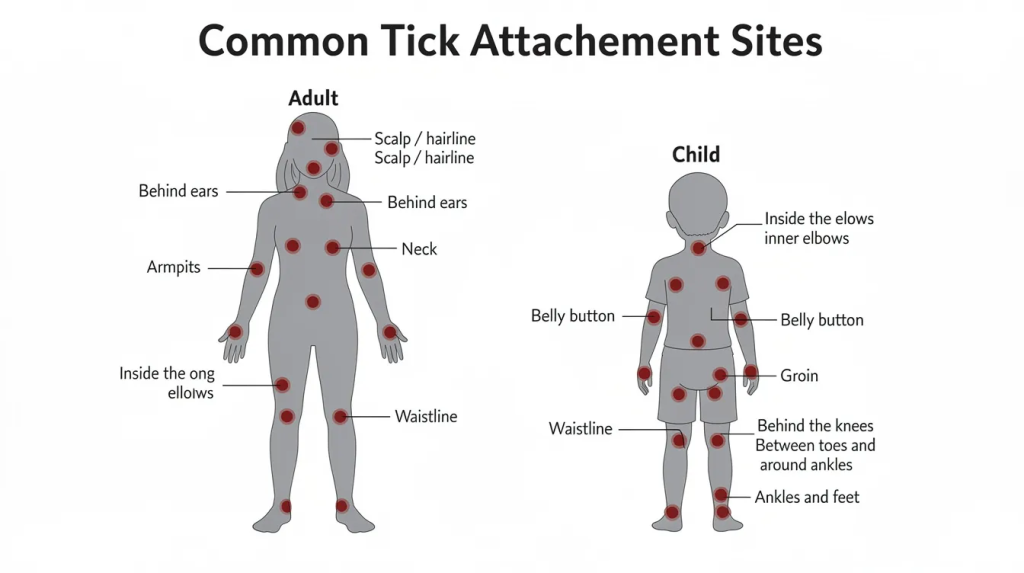
Focus your tick check on warm, hidden areas where ticks tend to attach.
This routine is especially important from April through November, when Safe Tick Control sees the highest tick activity in customer yards. Combining this checklist with a professional yard treatment plan offers layered protection.
Tick Removal Steps (CDC-Aligned)
If you find a tick attached, don’t panic. Prompt removal reduces disease transmission risk. Follow these CDC-recommended steps (cdc.gov):
Use fine-tipped tweezers and grasp the tick as close to the skin surface as possible
Pull upward with steady, even pressure—don’t twist or jerk, as this can leave mouthparts in the skin
After removal, clean the bite area and your hands with rubbing alcohol or soap and water
Note the date and estimated attachment time; consider taking a photo of the tick for species identification if needed
Dispose of the tick by placing it in alcohol, sealing it in a bag, or flushing it down the toilet
Do not use heat, nail polish, or petroleum jelly—these folk remedies don’t work and may increase risk. There’s usually no need to send ticks for testing, as lab results can be misleading and don’t replace clinical evaluation by your doctor.
Proper tick removal with tweezers (step-by-step)
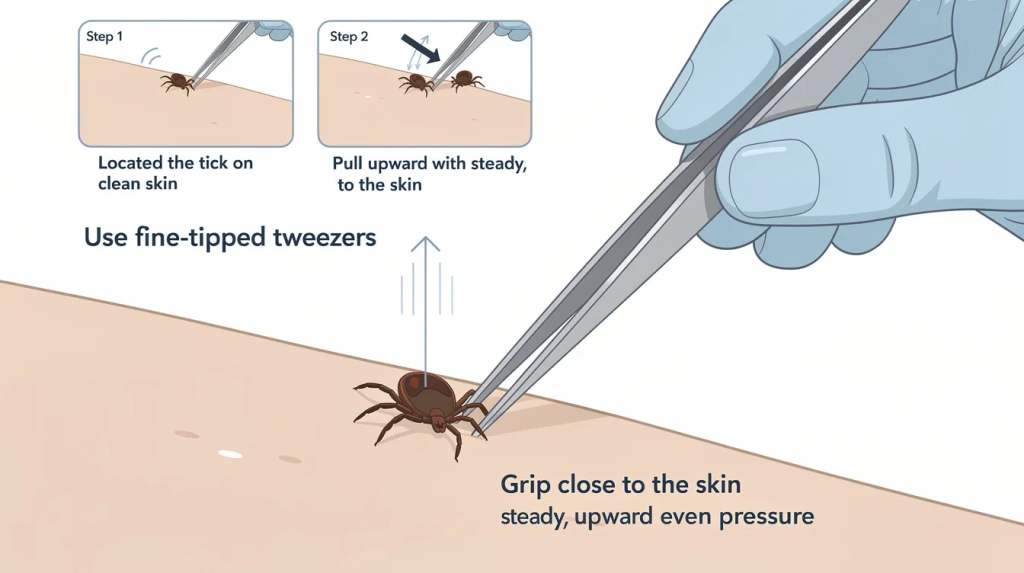
Steady upward pressure with fine-tipped tweezers is the safest removal method.
Protecting Pets
Dogs and outdoor cats are at high risk for tick bites and can also bring ticks into your home on their fur.
Coordinate with your veterinarian about year-round tick prevention, whether oral medications, collars, or topical treatments
Check dogs and cats after every walk or yard session, focusing on ears, neck, between toes, and around the tail
Keep pet bedding and favorite rest spots clean
Discourage unwelcome animals like deer and stray dogs from entering your yard, as they can bring ticks onto your property
Safe Tick Control can design a yard treatment plan targeting high-risk zones—woodlines, leaf litter accumulation, ornamental beds, and playset areas—using organic or conventional options that are designed to be safe for children and pets when applied as directed. [Internal link: Tick Control Services]
Next, let’s discuss how to manage your yard to reduce tick habitat and when to schedule professional treatments.
Yard Treatment & Tick Habitat Management in Fairfield County
Many tick bites in Connecticut happen in and around the home, not just on hiking trails or in parks. CDC data confirms that reducing tick habitat on your property is one of the most effective long-term strategies for disease control. Combining habitat management with targeted treatments works better than any single approach alone.
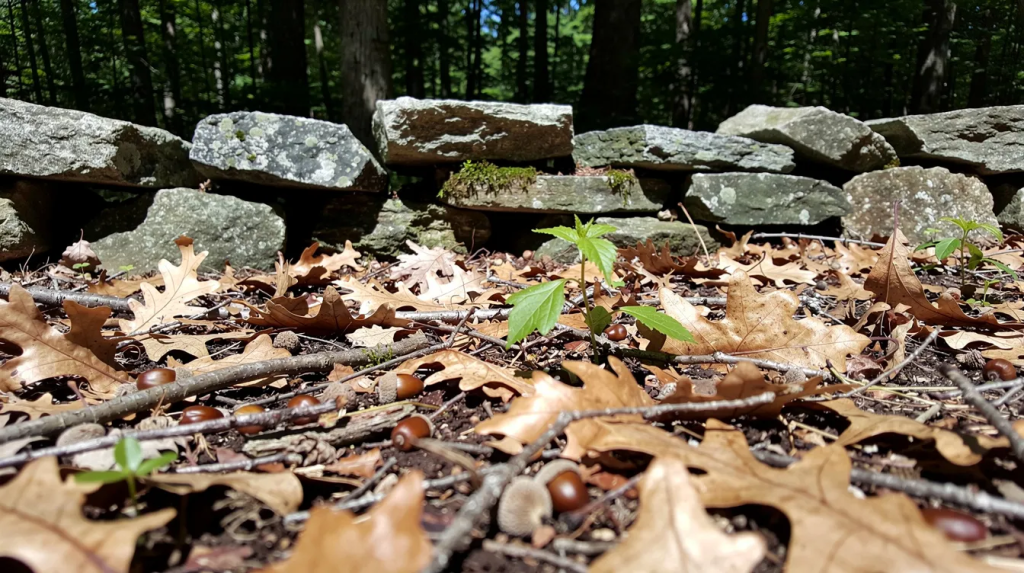
Ticks thrive in shaded, moist areas—exactly the conditions found at many Fairfield County property edges.
Landscaping Steps
The Connecticut Agricultural Experiment Station CAES Tick Management Handbook recommends several landscaping steps to reduce blacklegged tick populations and restrict tick migration into your yard:
Remove leaf litter from lawn edges and around play areas
Clear tall grasses and trim vegetation along property borders
Prune low branches to let sunlight reach the ground, which discourages rodents and dries out ideal tick habitats
Stack wood neatly in dry areas away from the house
Create a 3-foot barrier of wood chips or gravel between lawn and wooded edges to discourage tick crossing
High-priority Spots to Treat
Safe Tick Control inspects yards to identify perimeter and harborage areas—stone walls, property lines, shady beds, and playsets near woods—then focuses treatments on these high-risk zones rather than blanket-spraying entire properties, using high-pressure, high-volume equipment instead of ineffective methods like backpack sprayers for tick control, an approach reflected in our organic tick spray and prevention services across Greenwich and nearby towns.
High-priority spots to treat in Fairfield County yards:
Woodlines and wooded edges bordering lawn
Under decks and porches
Along stone walls
Ornamental groundcovers like pachysandra, ivy, and vinca
Around frequently used paths and garden beds
Near dog runs and outdoor pet areas
Professional Treatment Timing
Safe Tick Control offers both organic and conventional yard treatments, applied carefully by licensed technicians to minimize impact on non-target insects like pollinators. In communities like Norwalk and New Canaan, many households schedule local tick control services tailored to their town as part of a broader prevention plan supported by seasonal tick and mosquito treatments in New Canaan and the wider network of Safe Tick Control service areas across Fairfield County. For 2026, we typically recommend starting yard treatment plans in April, with follow-up visits roughly every 4–6 weeks through late fall. Timing is adjusted based on weather patterns and local tick activity observations.
Next, let’s look at how community awareness and avoiding common mistakes can further reduce tick risks.
Community Awareness and Vigilance: Staying Tick-Safe Together
Preventing tick borne diseases in Fairfield County isn’t just an individual effort—it’s a community-wide responsibility. When neighbors, schools, and local organizations work together, we can make a real impact on reducing blacklegged tick populations and lowering the risk of tick borne illnesses for everyone.
Public health officials and research scientists regularly share updates and guidance on tick activity, helping residents stay ahead of the latest trends. By spreading awareness about tick prevention, recognizing the symptoms of tick borne diseases, and encouraging simple landscaping techniques—like removing leaf litter and clearing tall grasses—we can all contribute to a safer environment. Creating a tick safe zone around homes, parks, and schools helps restrict tick migration and keeps high-traffic areas safer for children and pets.
Whether you’re organizing a neighborhood cleanup or simply sharing tips with friends, every action counts. Together, we can support public health, protect our families, and enjoy the outdoors with greater peace of mind.
Next, we’ll highlight common mistakes in tick prevention and removal, and how to avoid them.
Avoiding Common Mistakes in Tick Prevention and Removal
Common Prevention Mistakes
Even with the best intentions, it’s easy to make mistakes when trying to prevent tick bites or remove ticks from your skin. One of the most common errors is using home remedies like nail polish, petroleum jelly, or rubbing alcohol to try to smother or kill ticks. Not only are these methods ineffective, but they can actually increase the risk of tick borne diseases by causing the tick to release more germs into the bite area.
For preventing tick bites, always choose EPA registered insect repellents containing proven ingredients like DEET, picaridin, or oil of lemon eucalyptus. Homemade sprays or essential oils may not provide reliable protection against ticks. When it comes to yard care, don’t overlook the importance of simple steps: stack wood neatly in dry areas, mow your lawn frequently, and remove leaf litter to reduce ideal tick habitats. Discourage unwelcome animals such as deer and stray dogs, as they can bring more ticks onto your property and increase tick migration.
Proper Tick Removal
By avoiding these common pitfalls and focusing on science-backed prevention, you can create a tick safe zone around your home and minimize the risk of tick borne illnesses. Remember, prompt and proper tick removal with fine-tipped tweezers is always the safest approach—never use folk remedies. With a little vigilance and the right strategies, you can enjoy your yard and the outdoors with confidence.
Next, let’s review when it’s important to call a doctor after a tick bite.
When to Call a Doctor After a Tick Bite
Most tick bites in Connecticut do not result in illness, particularly if the tick is found and removed promptly. However, timely medical attention is important when certain symptoms appear after a bite.
Lyme disease and other tickborne diseases often show early symptoms 3–30 days after a tick bite, according to CDC guidance (cdc.gov). Early detection leads to better outcomes, so knowing what to watch for matters.
Call your doctor right away if you experience:
Fever or chills within a month of a tick bite
A spreading rash, especially a circular or bull’s-eye pattern (though not all Lyme rashes look like a bull’s-eye)
New or unusual headache or neck stiffness
Unexplained fatigue or muscle aches
Joint pain or swelling, particularly lyme disease affecting knees or other large joints
For some higher-risk bites—such as an engorged blacklegged tick attached for an estimated 36–48 hours or more—clinicians may consider a single preventive dose of doxycycline if you’re seen promptly. This decision depends on timing and individual circumstances.
A crawling, unattached tick does not transmit infection and usually doesn’t require a doctor’s visit. However, families should still perform a full tick check after finding one, since more ticks may be present.
Keep in mind that symptoms like fever without rash, sweats, or nonspecific symptoms like fatigue after a tick bite can indicate other tick borne illnesses such as anaplasmosis, babesiosis, or ehrlichiosis. Public health officials recommend medical evaluation even in the absence of the classic bull’s-eye rash.
If you have any concerns—especially for children, older adults, or people with weakened immune systems—contact your pediatrician or primary care provider rather than waiting to see if symptoms develop.
Next, discover how Safe Tick Control can help protect your family and pets in 2026.
How Safe Tick Control Can Help in 2026
Safe Tick Control is a family-owned, Greenwich-based company focused on protecting Fairfield County families from ticks and mosquitoes. We use both organic and conventional treatment options, tailoring our approach to each property’s layout and each family’s preferences.
A typical 2026 service starts with a quick phone call or online contact, followed by an on-site inspection. Our technicians walk your property to map out high-risk zones—those wooded edges, stone walls, shaded beds, and yard features where infected ticks are most likely to be found. From there, we design a yard treatment plan that targets these areas specifically.
What you can expect:
Same-day or next-day appointments when possible
Pet- and child-conscious application practices
30-day tick-free guarantee on synthetic treatments
Ongoing communication about treatment timing as the season progresses
We integrate our field observations with guidance from the CDC, Connecticut Department of Public Health, and the Connecticut Agricultural Experiment Station to adjust treatment focus as tick activity shifts through spring, summer, and fall. Our goal is practical protection, not fear-based selling.
If you live in Greenwich, Stamford, Darien, New Canaan, Norwalk, Westport, Weston, or elsewhere in Fairfield County, we’d be happy to take a look at your property and provide a free quote. Homeowners comparing options can learn more about why Safe Tick Control is the best tick control company in Greenwich. No pressure—just information to help you make the best decision for your family.
Sources
CDC Tick Bite Prevention Guidance: https://www.cdc.gov/ticks/prevention/index.html
CDC “What to Do After a Tick Bite”: https://www.cdc.gov/ticks/prevention/index.html
Connecticut Agricultural Experiment Station 2025 Active Tick Surveillance Summary: https://portal.ct.gov/-/media/caes/tick-office/active-tick-surveillance-program/2025/2025-summary-of-active-tick-surveillance-testing-results.pdf
Connecticut Agricultural Experiment Station Fairfield County 2025 Data: https://portal.ct.gov/-/media/caes/tick-office/active-tick-surveillance-program/2025-county-data/fairfield-co-2025.pdf
Connecticut Department of Public Health Municipal Data: https://portal.ct.gov/-/media/opm/finance/mfs-unit/municipal-fiscal-indicators/municipal-fiscal-indicators-2019-23—final—revised-asof-1-14-2026.pdf
CT Public Media – Tick Activity in Mild Winters: https://www.ctpublic.org/news/2023-01-18/milder-winters-mean-connecticuts-ticks-are-now-active-all-year-long
Connecticut Agricultural Experiment Station Press Release (2020): https://portal.ct.gov/-/media/caes/documents/publications/press_releases/2020/caes-press-release-active-tick-february-20-2020.pdf