
This guide focuses on the three ticks CT homeowners encounter most often: the blacklegged tick (commonly called the deer tick), the American dog tick, and the increasingly common Lone Star tick. Connecticut is home to several medically important tick species, and knowing which ticks are present in Connecticut is essential for preventing tick-borne diseases and protecting your family. Understanding which ones live in your yard can help you protect your family and pets from tick-borne illnesses and take effective steps to reduce risk. Knowing the types of ticks in Connecticut matters for your health and safety because different tick species carry different diseases, and recognizing them helps you take the right precautions to keep your family safe.
In recent years, there have been more ticks in Connecticut, with both native and new species increasing in number. This rise in the tick population makes tick awareness and prevention even more important for homeowners.
If you’re a Connecticut homeowner or parent concerned about Lyme disease and other tick-borne illnesses, this article is for you. We’ll walk through how to identify each tick species, when they’re active in our region, where they hide in typical yards, and what symptoms to watch for after a tick bite.
Safe Tick Control is a family-owned tick and mosquito control company headquartered in Greenwich, CT. We serve homeowners throughout Fairfield County and understand the specific tick challenges that come with living in southern New England.
By the end of this guide, you’ll know how to spot the difference between a deer tick and dog tick, recognize the emerging Lone Star tick, and take practical steps to reduce tick exposure around your home. Prevention and quick tick removal remain the most important defenses—and professional yard treatments can meaningfully reduce the number of ticks on your property.
Summary: Main Tick Species in Connecticut
Connecticut is home to several tick species, including the black-legged (deer) tick and the American dog tick. The two species of ticks most likely to be encountered in Connecticut are the American dog tick and the black-legged tick, often called the deer tick. The Asian longhorned tick is a non-native species that has been found in Connecticut, and several nonnative exotic tick species have been identified in Connecticut in recent years.
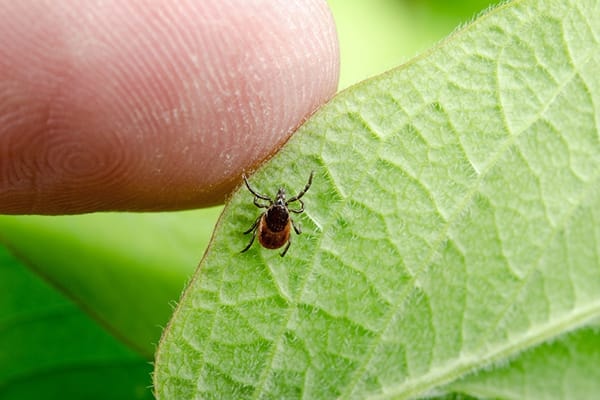
Quick Summary Table: Main Tick Species in Connecticut
Tick Species | Scientific Name | Most Commonly Encountered | Notes |
|---|---|---|---|
Black-legged (Deer) Tick | Ixodes scapularis | Yes | Primary vector for Lyme disease; common in wooded/shaded areas |
American Dog Tick | Dermacentor variabilis | Yes | Common in open, grassy areas; can transmit spotted fever and tularemia |
Lone Star Tick | Amblyomma americanum | Increasingly common | Emerging in CT; linked to ehrlichiosis and alpha-gal syndrome |
Asian Longhorned Tick | Haemaphysalis longicornis | Rare | Non-native; found in CT; can transmit diseases in native Asia |
Exotic Tick Species | Various | Rare | Four nonnative species identified in recent years |
Main Tick Species in Connecticut
While researchers at the Connecticut Agricultural Experiment Station have documented more than a dozen tick species in our state, three matter most for people: the blacklegged tick, the American dog tick, and the Lone Star tick. These are the ticks that most commonly bite humans and pets, and they’re the ones that carry diseases we need to watch for.
The black-legged tick (Ixodes scapularis), also known as the deer tick, is the primary vector for Lyme disease in Connecticut. This species is abundant in wooded and shaded areas and is responsible for most tick-borne illnesses in the state.
The American dog tick (Dermacentor variabilis) is commonly found in open, grassy areas. It is one of the two species most likely to be encountered in Connecticut and can transmit diseases such as Rocky Mountain spotted fever and tularemia.
The Lone Star tick (Amblyomma americanum) is an emerging species in Connecticut, increasingly found in brushy and overgrown habitats. It is linked to ehrlichiosis, STARI, and alpha-gal syndrome (red meat allergy).
Asian longhorned ticks and a few “exotic” species have been found in Connecticut, but this guide focuses on the ticks families are most likely to encounter in yards, on hiking trails, and on pets returning from outdoor play. The Gulf Coast tick has also been reported in the region, though it is less common, and homeowners should be aware of its potential health risks.
Here are the three main species you should know:
Black-legged tick (Ixodes scapularis): The black-legged tick, also known as the deer tick, is the primary carrier of Lyme disease, babesiosis, and granulocytic anaplasmosis in Connecticut. This species is abundant in wooded and shaded areas and is responsible for most tick-borne illnesses in the state.
American dog tick (Dermacentor variabilis): The American dog tick is commonly found in open, grassy areas and can transmit Rocky Mountain spotted fever and tularemia. It is one of the two species most likely to be encountered in Connecticut.
Lone Star tick (Amblyomma americanum): The Lone Star tick is an emerging species in Connecticut, increasingly found in brushy and overgrown habitats. It is linked to ehrlichiosis, STARI, and alpha-gal syndrome (red meat allergy).
The blacklegged tick is the primary source of Lyme disease in Connecticut, especially in Fairfield County where wooded residential lots create ideal habitat. Lone Star ticks are considered “emerging” in CT, with increasing finds along the coast and in southern counties over the past decade.
Blacklegged Tick (Deer Tick) in Connecticut
The blacklegged tick—better known as the deer tick—is the most important tick for Lyme disease in Connecticut. It’s abundant throughout Fairfield County’s wooded and suburban areas, thriving in the shaded, humid environments common around our yards.
Identification
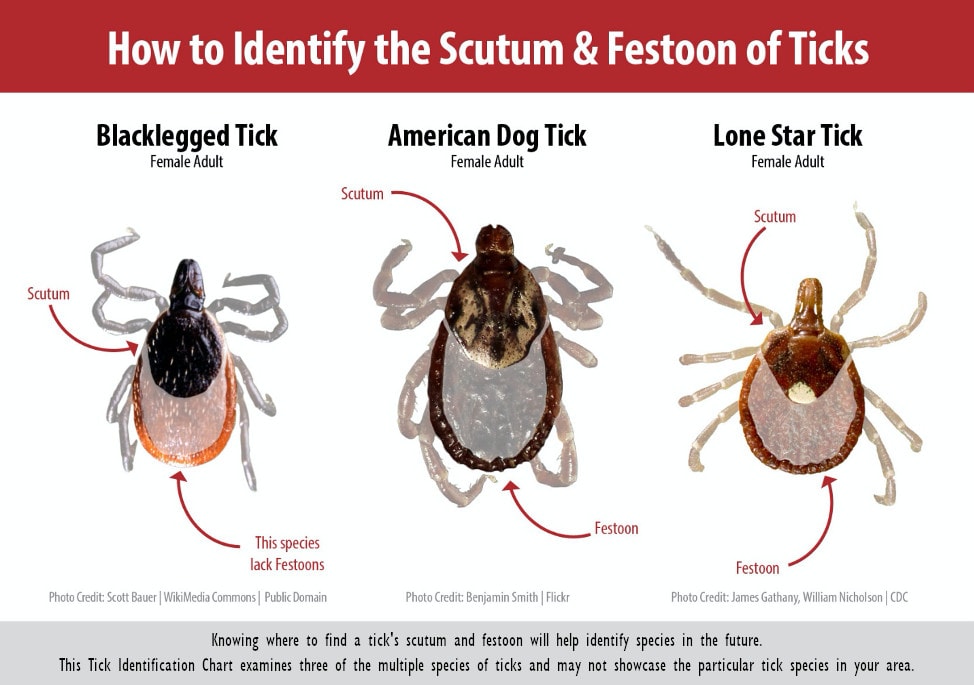
Adult females have a dark-brown to black shield (called the scutum) near the head, with an orange-brown body behind it. Before feeding, they’re roughly the size of a sesame seed. After a blood meal, their bodies swell significantly. When questing for a host, deer ticks hold their first pair of legs outstretched to latch onto passing animals or people.
Adult male ticks are smaller, darker, and more uniformly brown-black. Males are less likely to remain attached long enough to transmit disease, so finding an engorged female is the greater concern.
Nymphs are poppy seed sized—about 1 to 1.5 millimeters—and responsible for many Lyme cases because they’re easy to miss during a tick check, especially on children’s scalps and in skin folds. When checking for ticks, use a magnifying glass or your phone’s camera to examine any suspicious specks on skin or light colored clothing.
One helpful identification tip: deer ticks do not have the white “racing stripes” or large white dot seen on other species.
Habitat
Deer ticks favor cool, humid, shaded areas. You’ll find them in leaf litter, along stone walls, in brush piles, at property edges, and in the transition zones between woods and lawn. These ticks don’t typically venture into sunny, well-mowed areas.
Typical hiding spots include:
Under ornamental groundcovers like pachysandra and ivy
Around stacked firewood
Along fences bordering wooded areas
In tall, unmowed grass at property borders
Near stone walls where white footed mice nest

Diseases Spread
Deer ticks in Connecticut can transmit pathogens that cause several serious illnesses:
Lyme disease (caused by Borrelia burgdorferi)
Anaplasmosis (human granulocytic anaplasmosis)
Babesiosis (a parasitic infection affecting red blood cells)
Powassan virus (a rare but serious viral infection)
Borrelia miyamotoi (tick-borne relapsing fever)
A single deer tick bite can sometimes transmit more than one infection at once, which can make people feel very sick and complicate diagnosis.
Disease risk increases the longer the tick is attached. For Lyme disease, transmission often requires 24 to 36 hours or more of feeding, which is why early removal is so important. This is good news—it means daily tick checks give you a real window to prevent infection.
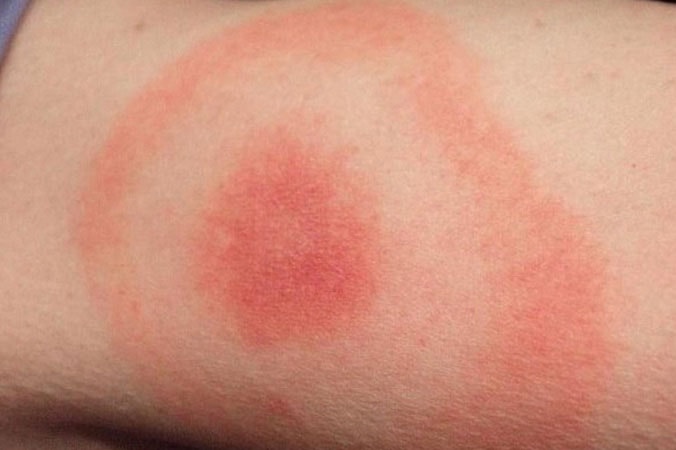
Early signs of Lyme disease include an expanding “bull’s-eye” or solid red rash at the bite site, usually appearing 3 to 30 days after the bite. Other early symptoms include fatigue, headache, fever, and joint pain. Not everyone develops a rash, so any flu-like symptoms after a known tick bite deserve attention.
American Dog Tick in Connecticut
The American dog tick is another common species in Connecticut, often found in more open, grassy areas. As the name suggests, dogs frequently pick up these ticks while walking through fields or along trails.
Identification
Adult dog ticks are noticeably larger than deer ticks. Adult females measure 5 to 10 millimeters and have mottled brown-and-white or gray markings on their back—often described as an ornate “marbled” pattern.
Females have a patterned shield near the head and a brown body that swells dramatically when engorged with blood. Male ticks have more extensive patterning across their entire back.
Larvae and nymphs are smaller and less often noticed by homeowners. Adults are the life stage most people find on themselves, their children, or their pets after time outdoors.
If you’re unsure about tick identification, compare any found tick to reliable ID charts or contact a local extension office or pest professional for confirmation.
Habitat
American dog ticks favor sunny, grassy areas rather than the shaded woods preferred by deer ticks. Look for them at field edges, along trails, in parks, near roadside vegetation, and in unmowed sections of yards.
These ticks often latch on at knee-level or higher as people or dogs walk through tall grass or along brushy borders. Unlike deer ticks that wait with legs outstretched on low vegetation, dog ticks may be found slightly higher in the grass.
Dogs that spend time in fields, around camping areas, or on hiking trails in Fairfield County are at higher risk of picking up American dog ticks.
Diseases Spread
American dog ticks can transmit:
Rocky Mountain spotted fever — A bacterial infection causing fever, headache, and a spotted rash that often starts on wrists and ankles
Tularemia — A bacterial disease that can cause skin ulcers, swollen lymph nodes, and fever
These infections are uncommon in Connecticut but can be serious when they occur. Any fever or rash appearing in the days after a tick bite deserves medical attention.
Parents should call a pediatrician if a child develops high fever, severe headache, or a spotted rash after a known or suspected tick bite.
Lone Star Tick: Emerging in Connecticut
The Lone Star tick was historically a southern species, common in states like Texas and the Southeast. Over the past two decades, however, it has been moving northward and is now being reported more often in coastal and southern New England—including Connecticut.
Identification
Adult female Lone Star ticks are medium-sized with a reddish-brown body and a single, clearly visible white dot on the back—the “lone star” that gives this tick its name.
Males lack the large central dot but have scattered pale markings along the edges of their body. Nymphs are small brown ticks without the obvious white spot, making them harder to identify.
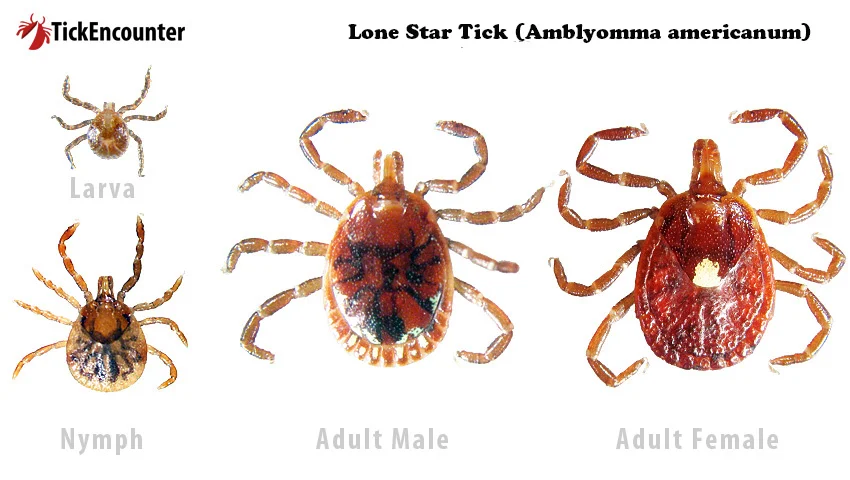
Lone Star ticks tend to be more aggressive than deer ticks. Rather than passively waiting on vegetation for a host to brush by, they may actively crawl toward body odors and movement.
Habitat
Most Connecticut reports come from the southern part of the state, including coastal counties and wooded or brushy areas with high deer activity.
Typical habitats include:
Dense underbrush and shrub thickets
Overgrown edges of trails
Unmanaged field borders
Brushy areas near deer paths
As temperatures warm due to climate change, these ticks may become more common in suburban yards, especially properties near woods or brushy greenbelts.
Diseases Spread
Lone Star ticks are linked to several health concerns:
Ehrlichiosis — A bacterial infection causing fever, chills, headache, and muscle aches, typically appearing 1 to 2 weeks after a bite
Tularemia — The same disease American dog ticks can carry
STARI (Southern tick-associated rash illness) — Can cause a rash similar to Lyme disease, though it’s thought to be less severe
Perhaps most notably, some Lone Star tick bites can trigger alpha-gal syndrome—a delayed allergic reaction to red meat.
Here’s how alpha-gal syndrome works in plain English: proteins in Lone Star tick saliva can cause your immune system to react to a sugar molecule called alpha-gal, which is found in beef, pork, and lamb. After being sensitized by a tick bite, some people develop allergic reactions—hives, stomach upset, swelling, or even serious anaphylaxis—several hours after eating red meat. Symptoms can persist for months or even years.
If you notice allergic reactions after eating red meat and have a history of tick bites, especially from Lone Star ticks, speak with a doctor or allergist.
Other and Invasive Ticks in Connecticut
In addition to the three main species, Connecticut is home to several other tick species, including the Asian longhorned tick and several exotic species identified in recent years. Researchers at the Connecticut Agricultural Experiment Station have identified additional tick species in our state beyond the three main ones. These include Asian longhorned ticks and occasional “exotic” ticks brought back by travelers or their pets.
The Asian longhorned tick (Haemaphysalis longicornis) is a non-native species that has been found in Connecticut. This tick is small, brown, and capable of reproducing very quickly (females can clone themselves without mating). Mostly found on livestock and wildlife, it is being monitored closely by public health officials. While it has not yet been shown to transmit diseases to humans in Connecticut, it is known to transmit diseases in its native Asia.
Several nonnative exotic tick species have been identified in Connecticut in recent years. The Connecticut Agricultural Experiment Station has identified four nonnative exotic tick species in Connecticut in recent years, including Amblyomma mixtum, Amblyomma coelebs, and Ixodes ricinus. These aren’t established in Connecticut but highlight why accurate identification matters—doctors assessing disease risk need to know what causative organisms might be involved.
For most Connecticut homeowners, the three main species—deer tick, dog tick, and Lone Star tick—remain the primary concern around homes and yards.
Tick Life Cycle and When They Are Active in Connecticut
Ticks progress through four life stages: egg, larva (with 6 legs), nymph, and adult (with 8 legs). Most human tick bites come from nymphs and adult females, as these are the stages that need blood feeding to develop to the next life stage or produce eggs.
Here’s a simple seasonal overview for Connecticut:
Season | What’s Active | Notes |
|---|---|---|
Spring | Nymphal deer ticks highly active; adult dog ticks appear | Peak risk for hard-to-spot nymph bites |
Summer | Nymphs and adult ticks active | Peak time for human tick bites overall |
Fall | Adult deer ticks very active | Lyme risk continues through November |
Mild Winter | Adult deer ticks active above 30°F | Don’t let your guard down on warm days |
Where Ticks Hide in a Typical Connecticut Yard
Many tick bites happen right at home—on playsets near the woodline, along the yard’s edge, or when pets go in and out of wooded areas. Ticks live in shady, humid microhabitats and rarely survive long in hot, sunny, dry areas.
Common yard “hot spots” for ticks include:
Edges where lawn meets woods or shrubs
Leaf litter under trees and around stone walls
Overgrown groundcovers, ivy, and pachysandra beds
Tall grass along fences, sheds, or property borders
Dog runs near brushy or wooded areas
Creating a “tick-safe zone” can significantly cut exposure. This means keeping play areas in sunny, open spaces and maintaining a buffer between your lawn and the woods. A simple 3-foot mulch or gravel barrier can help.
How to Check for and Remove Ticks Safely
Daily tick checks during warm months are one of the most effective ways to prevent Lyme disease and other tick-borne diseases. This is especially important for children and pets, who may not notice a tick quickly on their own.
Ticks secrete a cement like substance to anchor themselves firmly to the skin, which can make removal more challenging.
Body areas to check carefully:
Scalp and hairline
Behind ears
Neck
Armpits
Waistband and belly button
Behind knees
Groin
Around sock lines and between toes
Make tick checks a habit after yard time, hikes, sports practices on grass fields, and visits to parks or trails. Showering within two hours of coming indoors and tumbling clothes in hot water or a hot dryer can also help kill ticks you might have missed.
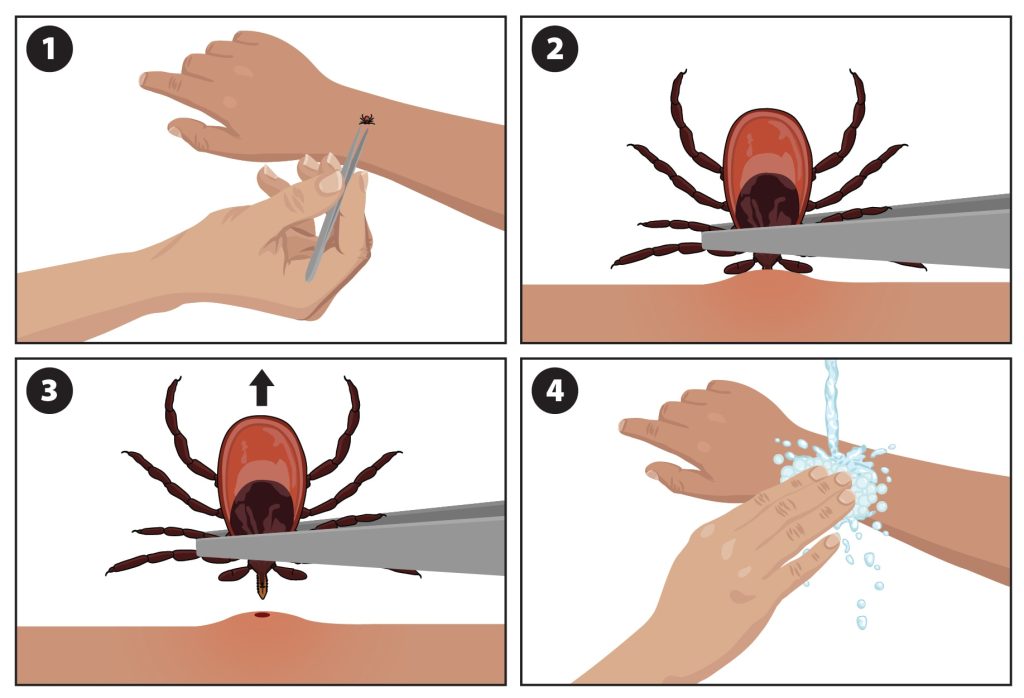
Step-by-Step Tick Removal
If you find an attached tick, remove it promptly using this method:
Use fine tipped tweezers (pointed tips work best)
Grasp the tick as close to the skin as possible, right where the feeding tube enters
Pull straight upward with steady, even pressure—do not twist or jerk
Do not crush the tick while it’s attached
Clean the bite site with soap and water or rubbing alcohol
If tiny mouthparts remain in the skin after removal, don’t panic. They usually work out on their own like a small splinter and don’t dramatically increase infection risk. Trying to dig them out can cause more irritation than leaving them alone.
Avoid folk remedies like petroleum jelly, nail polish, matches, or essential oils to make a tick detach. These methods can delay removal or cause the tick to regurgitate into the bite site.
After removal, take a clear photo of the tick for identification purposes. Dispose of the tick by placing it in rubbing alcohol, sealing it in a bag, or flushing it. Some people save ticks for potential tick testing, though testing results have limitations.
Symptoms of Tick-Borne Illness in Adults and Children
Most tick bites do not lead to disease. However, recognizing symptoms early makes treatment easier and more effective if an infection does develop.
Common early symptoms across several tick-borne illnesses include:
Fever and chills
Fatigue
Headache
Body and muscle aches
Joint pain
Swollen lymph nodes
New rashes appearing on exposed skin
The classic Lyme disease sign is an expanding circular rash—often but not always shaped like a bull’s-eye—appearing 3 to 30 days after a bite. Remember that not everyone who contracts Lyme develops a visible rash.
Rocky Mountain spotted fever can cause a spotted rash starting on wrists and ankles. Ehrlichiosis and babesiosis may feel like a bad case of the flu, with fever and fatigue but no distinctive rash.
Call a doctor or pediatrician promptly if fever, rash, or flu-like symptoms appear within a month of a known or suspected tick bite. Early treatment with antibiotics is highly effective for most bacterial tick infections.
Reducing Ticks in Your Yard (Connecticut-Focused Tips)
Combining good landscaping practices with targeted treatments offers the best long-term tick reduction around Connecticut homes. According to public health organizations like the CDC and NIOSH, effective tick management is a crucial part of disease control strategies to reduce the risk of tick-borne illnesses. You don’t need to turn your property into a manicured golf course—just focus on the areas where ticks are most likely to encounter your family.
Landscaping Strategies
Keep grass mowed and trim tall weeds, especially near play areas
Remove leaf litter, brush piles, and woodpiles near high-traffic zones
Create a 3-4 foot mulch, wood chip, or gravel barrier between woods and lawn
Place playsets, patios, and seating areas in sunny, open spots away from woodlines
Consider deer fencing or deer-resistant plantings where practical
Professional Treatments
Professional barrier sprays and tick tubes (which treat ticks on mice, a key host) can reduce tick populations significantly when applied correctly and on a regular schedule throughout tick season.
Safe Tick Control offers both organic and conventional treatment options, allowing you to choose what’s right for your family and pets. Our synthetic tick treatments come with a 30-day tick-free guarantee.
Personal Protection Tips
Wear long pants and pant legs tucked into socks when doing yard work near edges
Use EPA-registered tick repellents on skin and clothing
Perform daily tick checks after spending time outdoors
Shower soon after coming inside to help remove unattached ticks
Comparison Table: Tick Species, Appearance, and Diseases Transmitted
Diseases Transmitted
Tick Species | Appearance | Diseases Transmitted |
|---|---|---|
Black-legged (Deer) Tick | Small, dark brown/black, orange-brown body | Lyme disease, anaplasmosis, babesiosis, Powassan virus |
American Dog Tick | Larger, brown with white-gray marbled markings | Rocky Mountain spotted fever, tularemia |
Lone Star Tick | Medium, reddish-brown, female has single white dot | Ehrlichiosis, STARI, alpha-gal syndrome, tularemia |
Asian Longhorned Tick | Small, brown, no distinctive markings | Not yet known in CT, but can transmit diseases in native Asia |
Exotic Tick Species | Varies | Varies |
Natural Tick Repellents for Connecticut Homeowners
Connecticut’s wooded landscapes and abundant wildlife make our state a hotspot for many tick species, including the blacklegged tick (deer tick), lone star tick, and American dog tick. With the risk of Lyme disease, Rocky Mountain spotted fever, Powassan virus, and other tick-borne illnesses, it’s no wonder homeowners are looking for safe, effective ways to prevent tick bites—especially around children and pets.
Natural tick repellents offer an extra layer of protection for families who want to minimize chemical exposure while still reducing the risk of infection. Here are some of the most effective options and strategies for Connecticut yards:
Safe Tick Control’s Approach in Fairfield County
Safe Tick Control is a local, family-owned company headquartered in Greenwich, CT. We understand the specific tick pressures homeowners face in southern Connecticut because we live and work here ourselves.
We serve communities throughout Fairfield County, including Greenwich, Stamford, Darien, New Canaan, Norwalk, Westport, Weston, and surrounding towns.
Our main services include:
Seasonal tick and mosquito yard spraying
Organic and conventional barrier treatments
Tick tubes targeting ticks on mice populations
Pet-safe and child-conscious treatment plans
Same-Day Tick Control
Schedule Your Tick Pest Control Spray Service Today
We offer fast same-day or next-day service when possible, a 30-day tick-free guarantee on synthetic treatments, and customized programs based on each property’s specific habitat and tick pressure. Whether you have a small suburban lot or a larger wooded property, we design a plan that fits.
FAQ: Types of Ticks and Tick Safety in Connecticut
These are common questions we hear from Connecticut homeowners and parents about tick species, tick bites, and yard safety.
Q1: What are the most common ticks in Connecticut?
The three most common species are deer ticks (blacklegged ticks), American dog ticks, and increasingly Lone Star ticks. Deer ticks are the main carriers of Lyme disease in our region.
Q2: How can I tell a deer tick from a dog tick?
Deer ticks are smaller (sesame seed-sized as adults), with a dark shield and orange-brown body. Dog ticks are larger with distinct white-gray marbled markings on their back. Side-by-side comparison photos can help with identification.
Q: Why don’t tick bites usually hurt?
Tick saliva contains anesthetic properties that numb the bite area, making it less likely for people to feel the tick attach and feed.
Q3: Are Lone Star ticks really in Connecticut now?
Yes. Lone Star ticks are considered an emerging species in Connecticut, especially in southern and coastal parts of the state. While still less common than deer ticks, their numbers have increased significantly over the past decade.
Q4: Which tick species carry Lyme disease in CT?
Lyme disease is primarily transmitted by blacklegged (deer) ticks. American dog ticks and Lone Star ticks do not spread Lyme disease but can carry other tick-borne illnesses like ehrlichiosis, tularemia, and spotted fever.
Q5: How long does a tick need to be attached long enough to spread disease?
For Lyme disease, transmission often requires 24 to 36 hours or more of attachment. Some other infections may transmit disease faster. This is why daily tick checks and prompt removal are so effective—finding ticks early gives you a real window to prevent infection.
Q6: Should I get every tick tested?
Tick testing can provide detailed information, but results are sometimes mixed or delayed. Many experts recommend focusing on monitoring for symptoms and contacting a doctor rather than relying solely on tick test results to guide decisions. If you do save a tick, store it in rubbing alcohol.
Q7: Are organic tick treatments effective for my yard?
Well-designed organic programs can reduce tick activity when combined with good yard maintenance. They may require more frequent applications than conventional treatments. We offer both options so families can choose based on their preferences.
Q8: How often should I treat my yard for ticks in Connecticut?
A typical schedule runs from early spring through fall, with applications roughly every 4 to 6 weeks during peak tick activity. The exact timing depends on your property’s specific conditions.
[Internal link: Tick Control Services]
Next Steps for Connecticut Homeowners
Understanding the tick species in your Connecticut yard is the first step toward enjoying the outdoors more safely. Whether you’re gardening, watching your kids play, or walking your dog along the property edge, knowing what to look for makes a difference.
The key takeaways are straightforward: do regular tick checks after time outside, learn to recognize deer ticks vs dog ticks vs Lone Star ticks, maintain a tick-smart yard by removing leaf litter and creating sunny play zones, and act quickly on any concerning symptoms after a tick bite. Preventing tick bites through awareness and prompt removal remains the most effective defense.
If you live in Fairfield County and want professional help reducing ticks around your home, Safe Tick Control is here to help. We offer both one-time treatments and season-long programs, with options for organic or conventional applications based on your family and pet needs.
Ready to take the next step? Contact Safe Tick Control through our website or by phone to schedule a yard inspection and discuss a customized tick control plan for your property.